
Culture & Art
Michelangelo's Florence: From the David to the Secret Room
I have stood in front of Michelangelo's work more times than I can count, and I keep waiting for the day it feels ordinary. It never does. Something about his marble refuses to be just stone. You feel him in it: his stubbornness, his hunger, his genius, and his love for this city. And if you let it, you will feel Florence itself breathing through every chisel mark.
A book first brought me to Florence, but Michelangelo’s art keeps me captivated. From the David’s defiant beauty to the intimate sketches in a hidden room beneath the Medici Chapels, follow me through the places where his genius still feels alive.
How a Book Brought Me to Florence
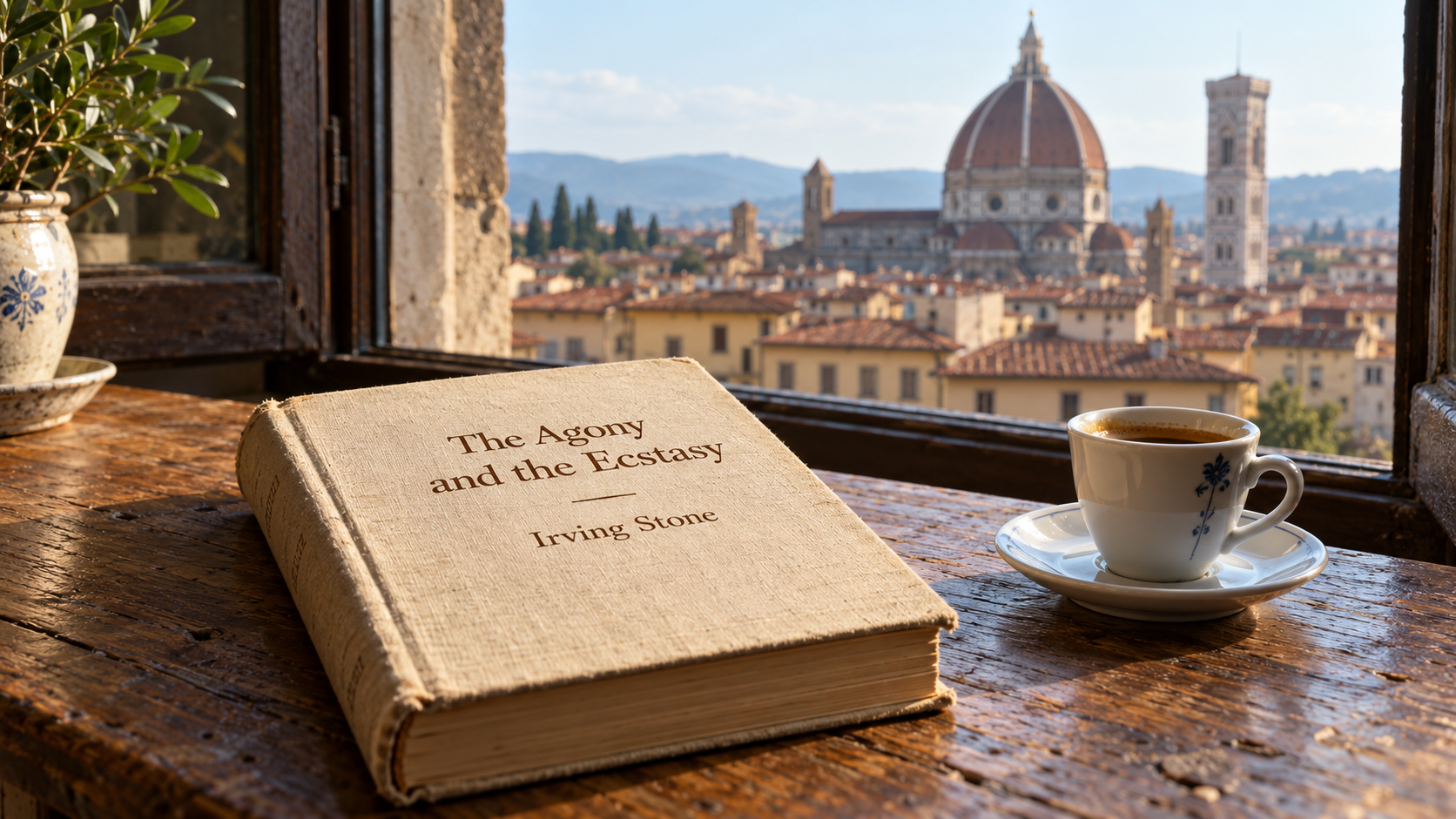
Long before I ever walked these streets, I met Michelangelo on the page. I read Irving Stone's The Agony and the Ecstasy, and I could not put it down. Stone wrote him as a man who was almost consumed by his art. He was a boy sneaking into the hospital at Santo Spirito to study anatomy by candlelight, a young sculptor arguing with popes, a genius who believed the figure was already living inside the block and that his job was simply to set it free.
I closed that book and knew I had to see his Florence with my own eyes. I wanted to walk where he walked, stand where he stood, and feel what he felt. That longing brought me here, and it keeps me here.
Start at the Accademia: Meeting the David
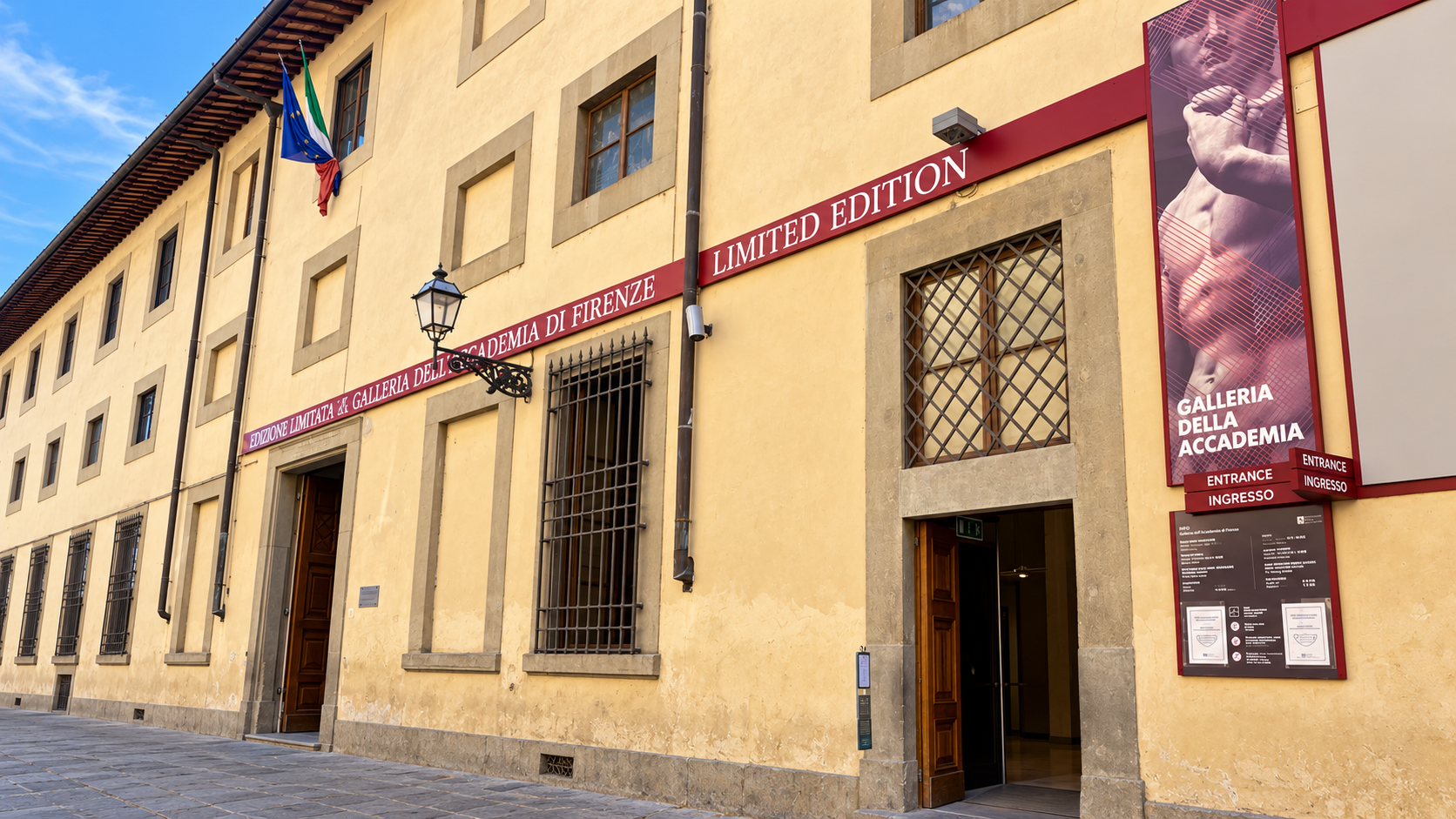
If you are going to follow Michelangelo through Florence, begin at the Galleria dell'Accademia.
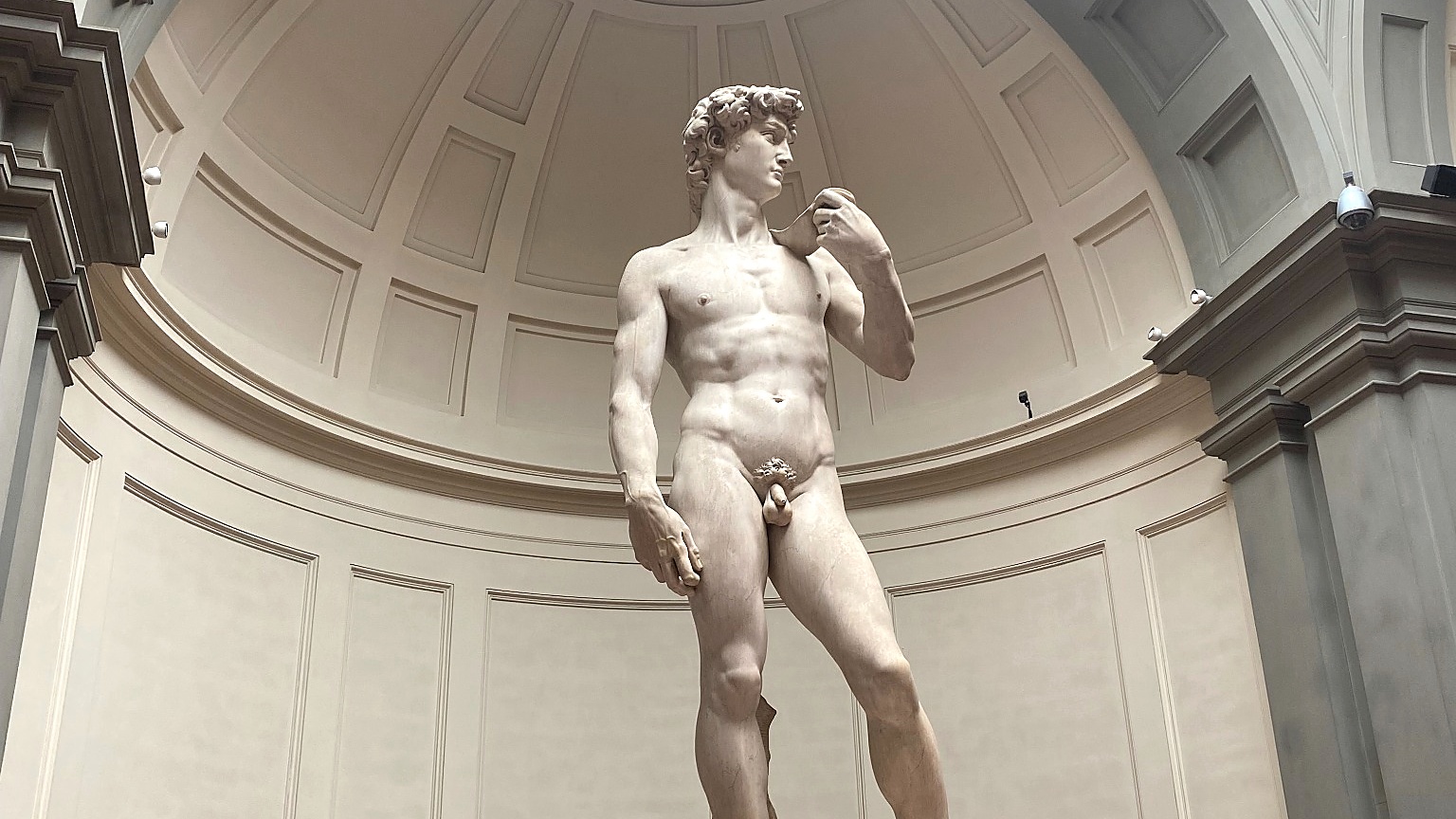
Before you reach the David, you walk down a long hall lined with his Prisoners, unfinished figures twisting and straining to break free from the rough marble. Take your time here. These are some of the most honest works he has ever left behind, because you can actually see the struggle. You can see where his chisel stopped. And then, at the end of the hall, under the tribune light, there he is.
Michelangelo was only in his mid-twenties when he took on a towering block of marble that other sculptors had started and abandoned. Florentines called it "the Giant." Between 1501 and 1504, he turned that rejected stone into the world's most famous sculpture. The David is not just a beautiful young man. He is Florence in the moment before battle: alert, defiant, a little afraid, and completely determined. Look at his hands, the veins, the tension in his brow. That is confidence. That is a young artist announcing to the world exactly who he is.
Hold on to that feeling, because the next stop shows you the other side of the man.
The Medici Chapels: One of the Most Beautiful Places in Florence
The Medici Chapels, at the back of the Basilica of San Lorenzo, are for me one of the most breathtaking places in the entire city. You first pass through the Chapel of the Princes, an enormous octagonal room glowing with inlaid marble and semiprecious stone, built to show the world just how powerful the Medici family was.
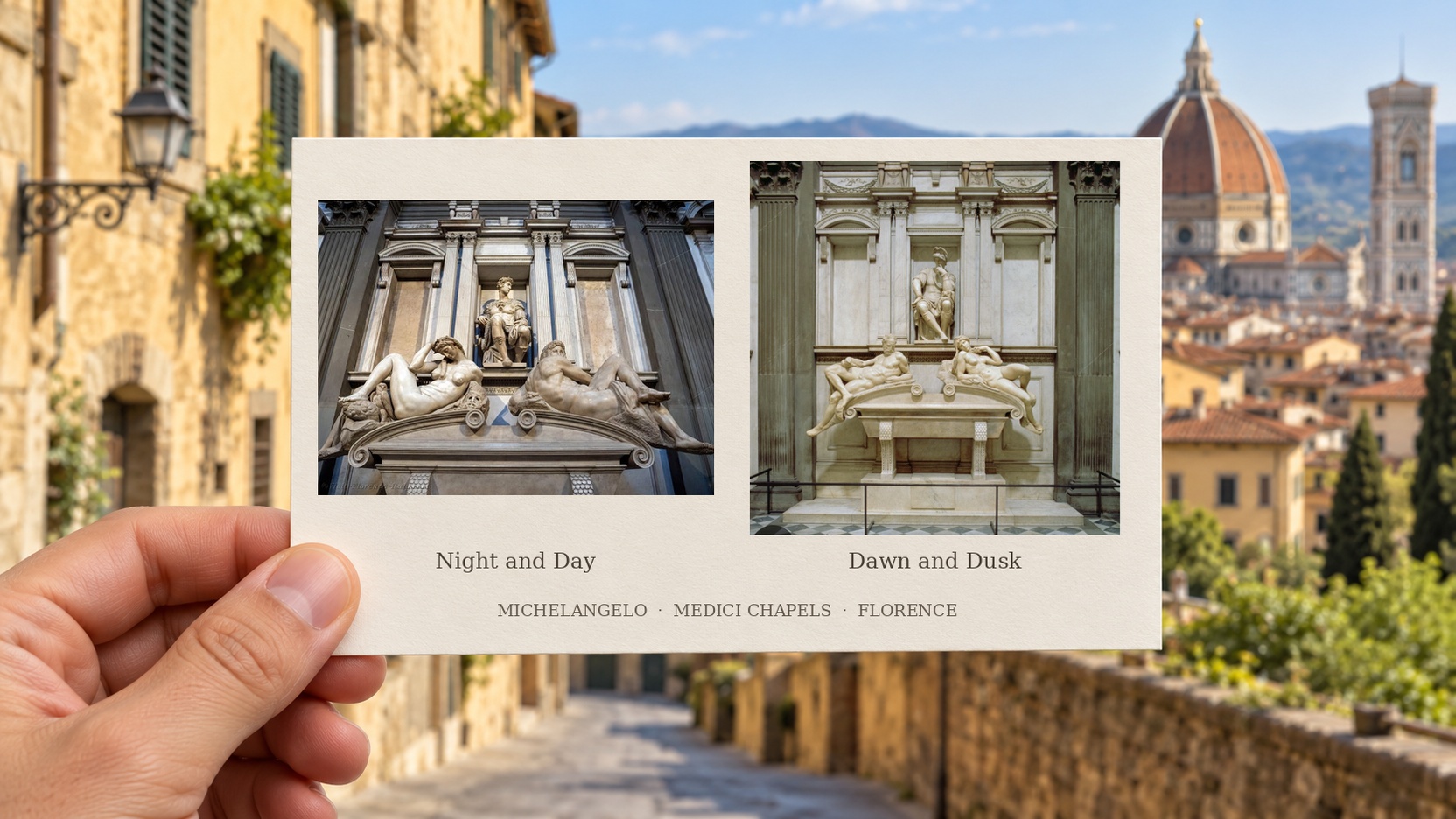
But the heart of this place is the New Sacristy, designed by Michelangelo himself. Here the Medici tombs are guarded by his reclining figures of Night and Day, Dawn and Dusk. They are heavy with emotion, almost melancholy, as though time itself is weighing on them. The architecture is pure and calm, gray stone against white walls, and when you stand in the middle of the room, it feels like the whole space is holding its breath.
And just beneath your feet was a secret that stayed hidden for more than four hundred years.
The Secret Room: How It Was Discovered
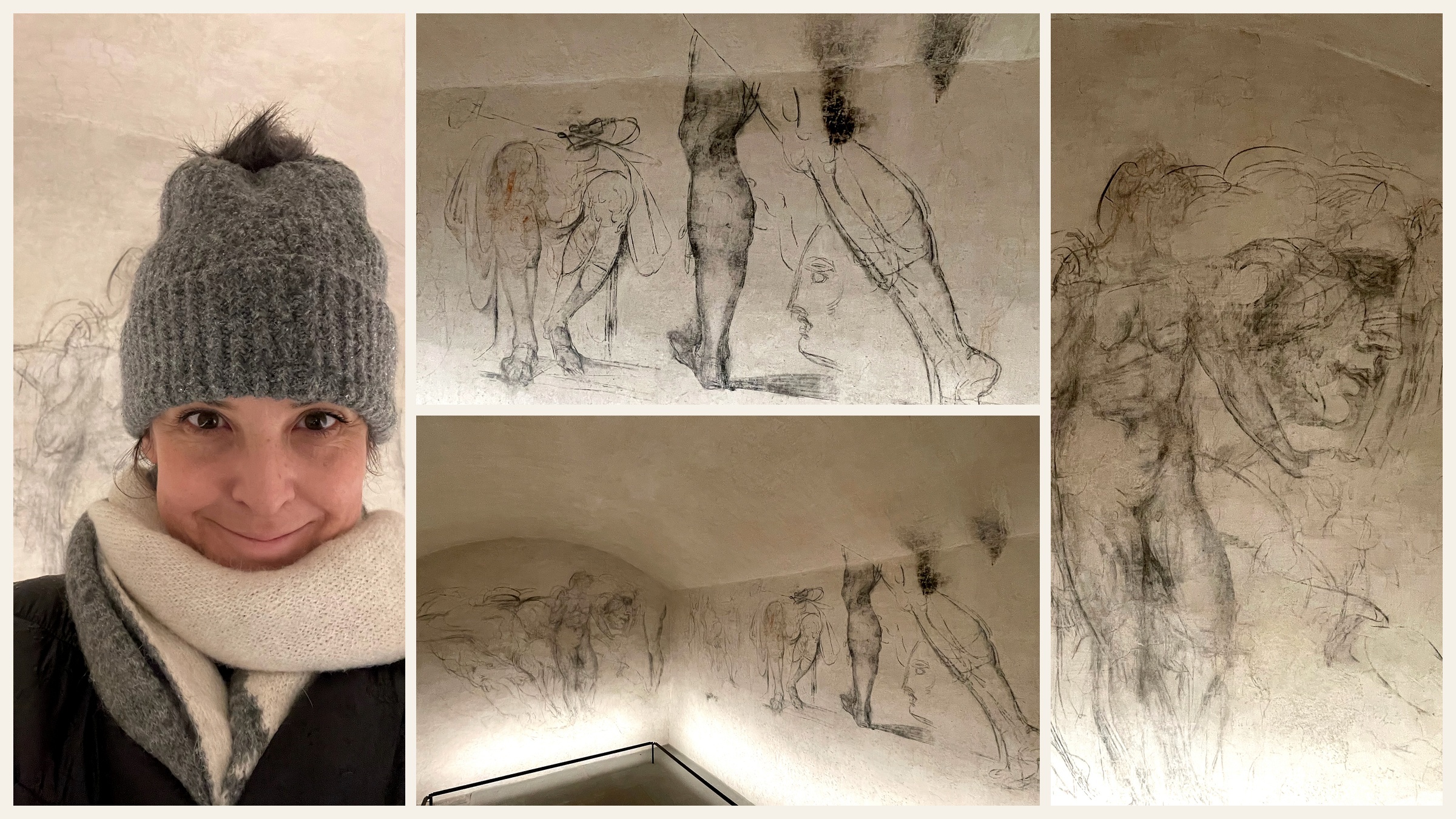
In 1975, museum staff were looking for a new way to move visitors through the chapels. Beneath the New Sacristy, they found a trapdoor leading to a small, narrow room used for storage. When they carefully removed layers of plaster from the walls, they found something no one expected: charcoal and chalk drawings covering the walls. Legs, torsos, faces, and figures that looked remarkably like Michelangelo's own work. Historians believe the story goes like this. In 1530, after the Medici returned to power, Michelangelo was in real danger. He had supported the Florentine Republic against them, and he had reason to fear for his life. So the man who was building the Medici tombs hid beneath them. For weeks, possibly a couple of months, he stayed in that tiny space, with little light and nothing but time, his thoughts, and the walls around him. And what did he do? He drew. Of course he did.
Why It Matters to See Both
This is why I always tell people to see the David first, and then, if you are lucky enough to get access, to see the secret room.
At the Accademia, you meet Michelangelo the legend. The young genius at the height of his power, carving a symbol of courage for an entire city.
In the secret room you meet Michelangelo the man. Older, hunted, hiding in the dark, and still unable to stop creating. These are not finished masterpieces made for princes and popes. They are private sketches, ideas, studies, the thoughts of an artist who needed to make something even when his own life was uncertain. Some scholars see echoes of figures he would create later, and of works he had already carved.
Standing in that small room, you understand his passion wasn't something he performed for patrons. It was who he was. Fear, exile, danger, none of it could take that away from him. When I think about that, I get goosebumps all over again.
The room is small and fragile, so access is very limited and has to be booked well in advance through the museum. If you can get a spot, take it. It is one of the most intimate experiences you can have with any artist, anywhere.
Feeling His Passion, Again and Again
People sometimes ask me if it ever gets old to see the same works over and over. My answer is always the same: never.
Every time I stand in front of the David, or sit quietly in the New Sacristy, or think about Michelangelo sketching by candlelight beneath the chapel floor, I feel the same thing I felt when I first read about him all those years ago. His talent, his stubborn love for his work, and his complicated, lifelong love for Florence.
That is what this city does. It lets you stand in the same rooms as the maestro and feel, just for a moment, what he felt.
So when you come to Florence, do not just see Michelangelo. Let yourself feel him. I promise you will understand exactly why I still get goosebumps.
By Janet von Rusten
Exquisitely Italy
Ready to experience Italy this way?
Every journey I curate is as personal as the stories I write here. Let's plan yours.