
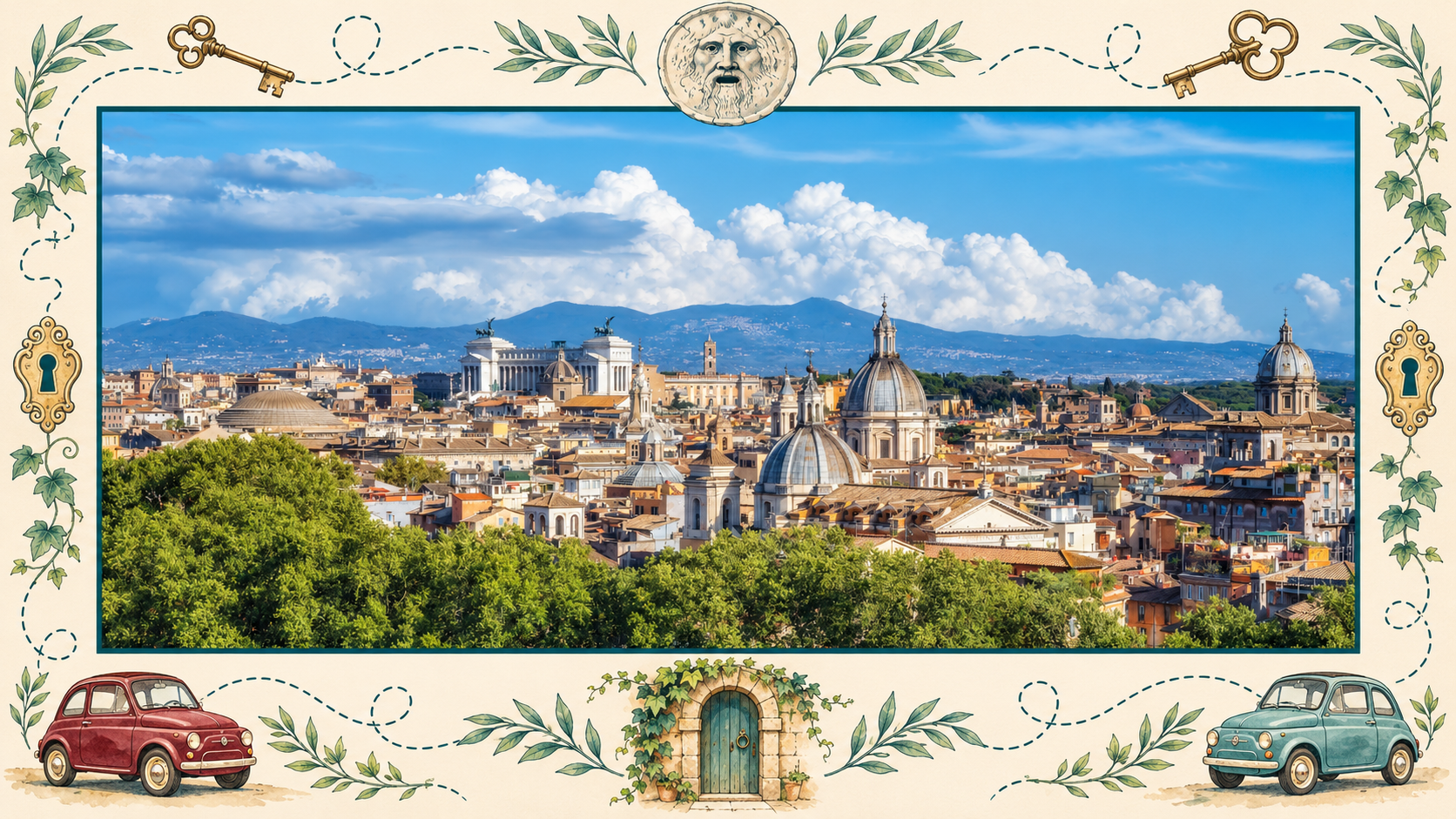
Hidden Gems
Secret Rome, Part One: Whispers, Fountains and a Little Fiat
Rome saves some of its loveliest surprises for those who wander beyond the familiar. Join me for Part One of Secret Rome, from ancient waters near the Trevi Fountain to Trastevere’s irresistible lanes with a vintage Fiat 500 adding a little Italian movie magic along the way.
Rome keeps its best secrets just out of sight: beneath a fountain, behind a keyhole, inside the mouth of a marble face that has been judging visitors for centuries.
Rome saves some of its loveliest surprises for those who wander beyond the familiar. Join me for Part One of Secret Rome, from ancient waters near the Trevi Fountain to Trastevere’s irresistible lanes—with a vintage Fiat 500 adding a little Italian movie magic along the way.
Most travelers arrive with a checklist and leave with a camera roll full of the same photographs everyone else has taken. I understand the temptation. The Colosseum is breathtaking; the Pantheon still steals my breath every single time. But the Eternal City saves its real magic for the curious. Step off the main piazza, follow a side street that seems to lead nowhere, or simply pause long enough to look a little more closely, and Rome begins to whisper.
This is Part One of my little love letter to secret Rome: the places I return to again and again, the ones I can never quite stop talking about. Pour yourself a glass of something lovely. Let's wander.
The Most Romantic Way to See It All:
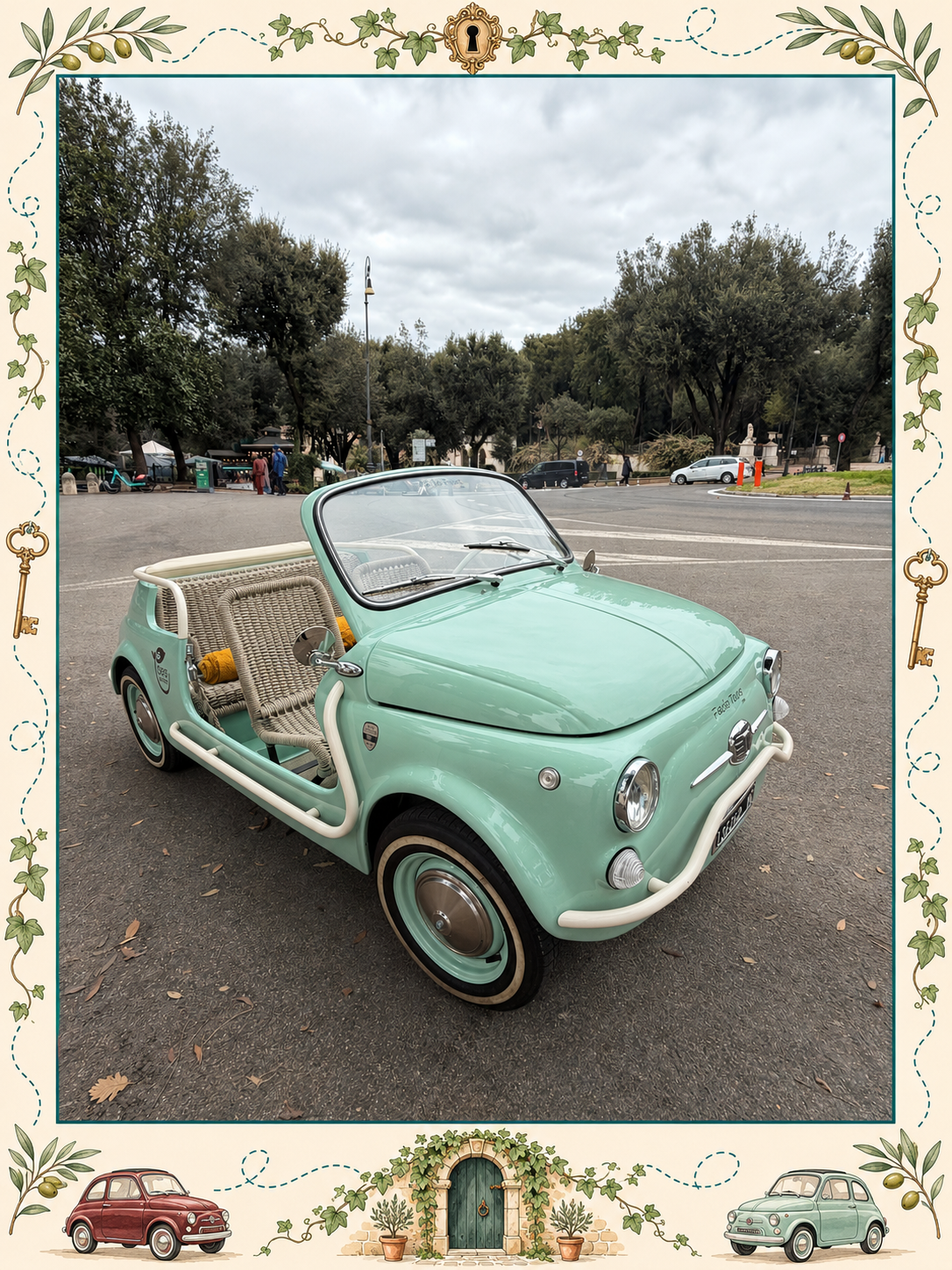
A Private Classic Fiat Tour
Before we begin, let me tell you how I would travel between these hidden treasures: tucked into a vintage Fiat 500, top rolled back, with a private driver who knows every shortcut, every story, and exactly where to find the best espresso along the way.
Picture this... Dean Martin and Domenico Modugno drift from the speakers as you putter past sun-warmed ochre walls and terraces spilling over with bougainvillea. The little car hums and bounces along cobblestones that once carried chariots. At every corner, someone turns to look, and before you know it you are waving and calling out "Ciao!" to complete strangers who wave right back, faces breaking into the warmest smiles. A nonna watering geraniums on her balcony. A waiter in a crisp white apron setting tables for lunch. Two schoolboys on a Vespa who honk and cheer as they zip past.
Somewhere between the Tiber and the Aventine, it happens. Your shoulders soften. The city's golden light pours over you like warm honey, and you realize you are no longer simply visiting Rome. You have become part of its daily theater, if only for an afternoon.
A classic Fiat tour is not only charming, but it is an iconic way to feel Rome. These tiny cars slip down lanes where tour coaches could never dream of following, connecting sites that would otherwise take hours on foot. Trust me, nothing beats pulling up to an ancient monument in a cherry red Cinquecento.
La Bocca della Verità: The Mouth of Truth
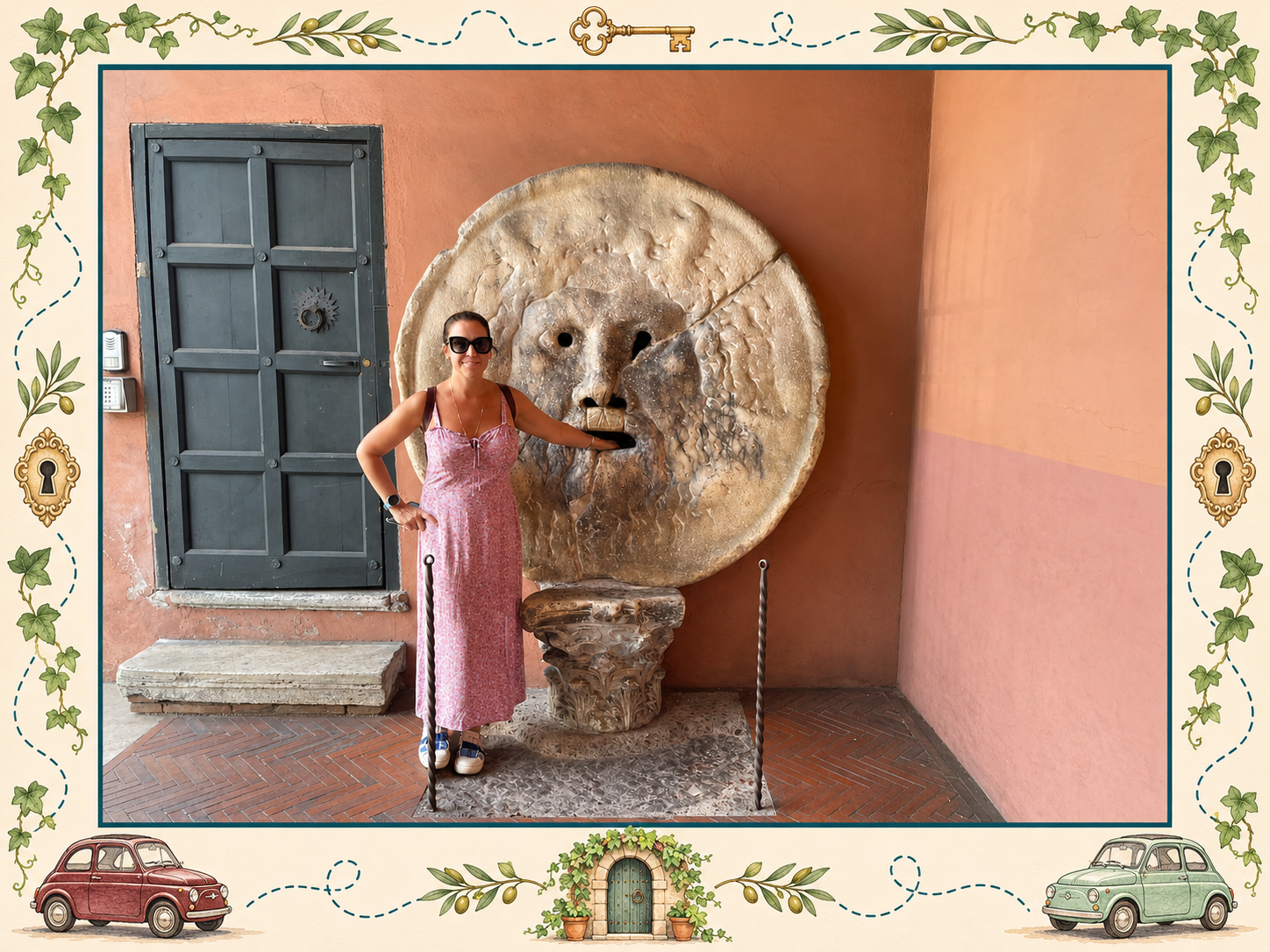
Under the portico of the Basilica of Santa Maria in Cosmedin waits a great marble face with hollow eyes, a furrowed brow, and a wide, dark mouth. Legend says that if you place your hand inside and tell a lie, the mouth will snap shut and bite it clean off.
The disc is ancient, carved some two thousand years ago and most likely used as a drain cover in the nearby Forum Boarium, Rome's old cattle market. Over the centuries it became something far more theatrical: a medieval lie detector, a test for suspected unfaithful spouses, and eventually a movie star, thanks to Gregory Peck and Audrey Hepburn in Roman Holiday. If you have seen the film, you know the scene. Audrey's shriek still echoes in my head every time I stand in that line.
I have visited twice, and both times I hesitated with my fingers hovering at the edge of that dark opening. Not because I had anything to confess, but because I simply could not see what was waiting in the back of that mouth. Cool stone? A spider? Two thousand years of other people's secrets? I took a breath, slid my hand in, and held it there just long enough to feel brave. Both times my hand came out perfectly intact.
Arrive early in the morning or just before closing, when the line is shortest. Then step inside the basilica itself. The quiet, candlelit interior and its glittering Cosmatesque marble floor are a world away from the photo queue outside, and almost no one bothers to go in.
Beneath the Trevi Fountain: The City of Water
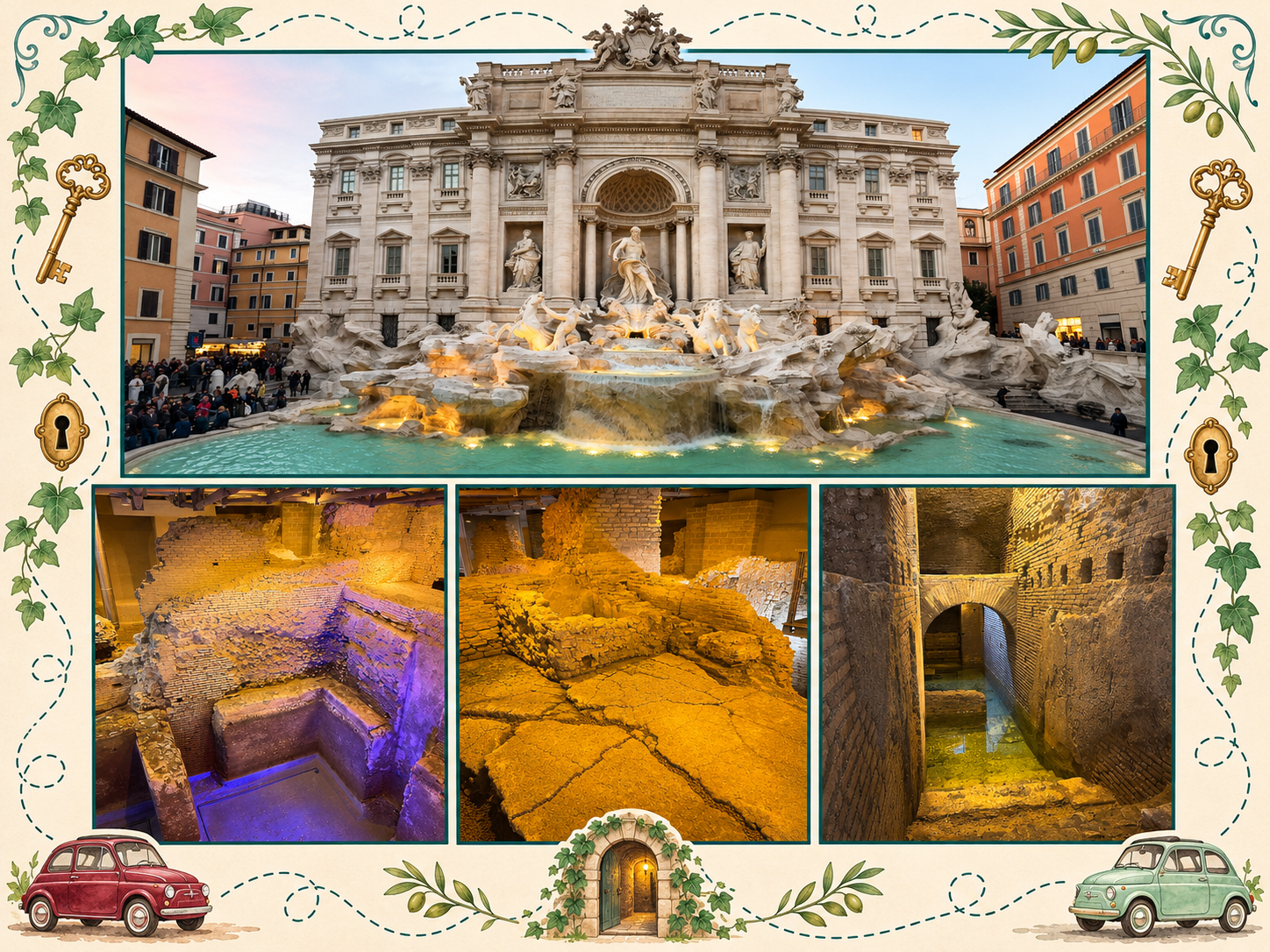
Everyone knows the Trevi Fountain. Very few know what lies beneath it. But just a few steps from the coin-tossing crowds and the selfie sticks, an unassuming doorway on Vicolo del Puttarello leads down to Vicus Caprarius, known as La Città dell'Acqua, the City of Water.
With every step down, the air grows cooler, and the noise of the piazza softens until, roughly nine meters below street level, it disappears altogether. All you hear is water. Here you can wander through the remains of an imperial Roman house and a great cistern from the age of Hadrian, glowing softly under amber light.
Workers discovered the ruins entirely by chance in the late 1990s, while renovating an old cinema. Imagine expecting popcorn and finding ancient Rome instead. What makes the site truly magical is that the water never stopped flowing. The same ancient aqueduct, the Aqua Virgo, still runs here and still feeds the Trevi Fountain above, so the water shimmering among these ruins is the very same water tumbling over Neptune's chariot overhead.
Since February 2026, a €2 ticket is required to step down into the fountain basin, while the view from the piazza above remains free. My advice? Visit the fountain at dawn or late at night, when the marble glows, and the crowds have melted away. Toss your coin over your left shoulder, make your wish, then slip underground for a little secret Rome that most visitors walk right past.
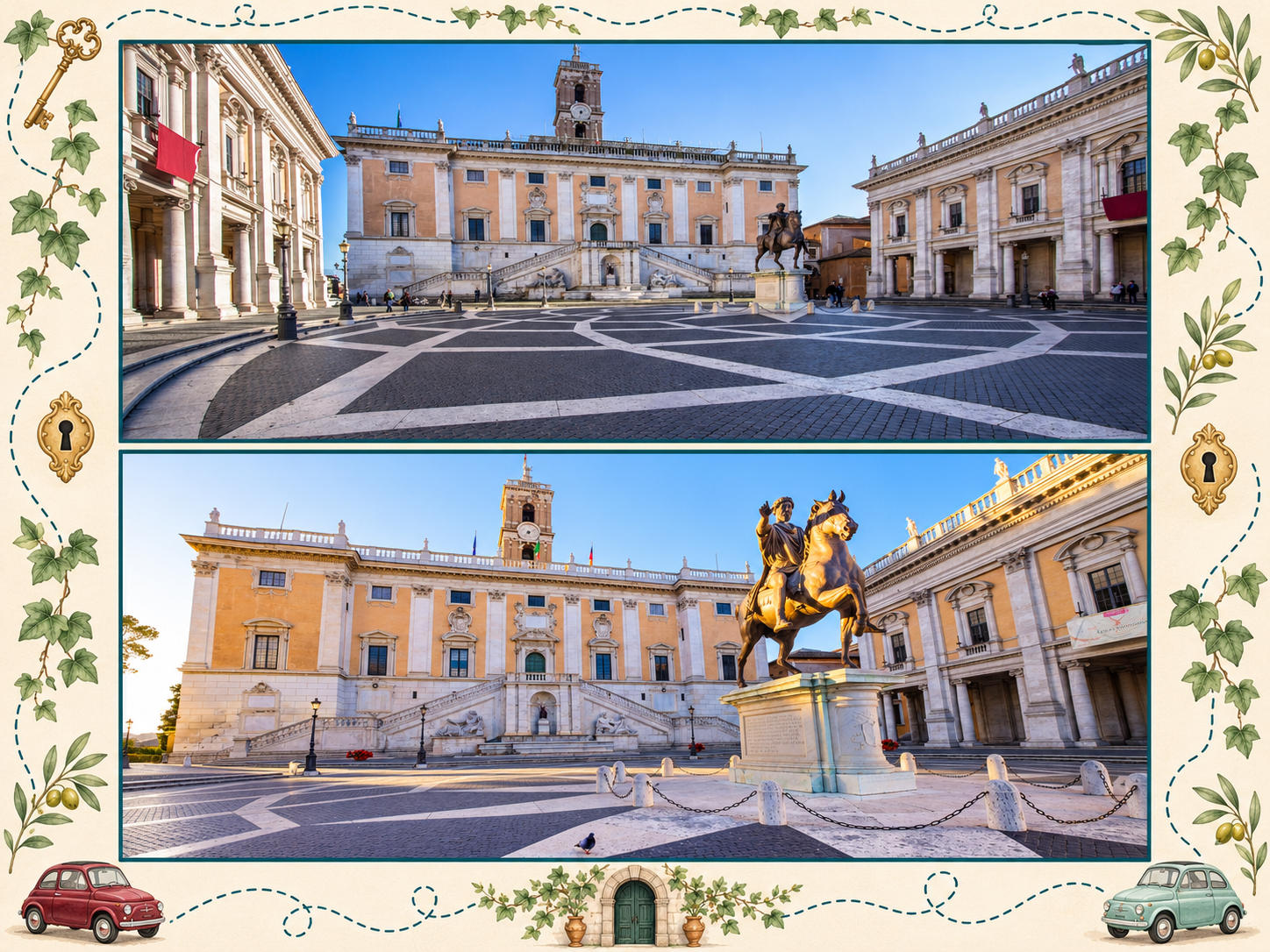
Michelangelo's Masterpiece Underfoot: Piazza del Campidoglio
Climb the gentle, sweeping ramp of the Cordonata, flanked at the top by the great marble twins Castor and Pollux, and you arrive in one of the world's most elegant squares, designed by none other than Michelangelo.
Now look down. Beneath your feet, a pale geometric star unfurls across the piazza in an oval of interlacing curves, almost like lace pressed into stone. At its center rises the bronze statue of Emperor Marcus Aurelius on horseback. Michelangelo designed this pavement in the sixteenth century, but they didn't lay it until 1940, nearly four hundred years after he first sketched it. Some masterpieces are simply worth the wait.
Here is the secret most visitors miss: reach into your wallet. The Italian 50-cent euro coin shows Marcus Aurelius on his horse, set against Michelangelo's star-patterned pavement. I love that. A small piece of the Campidoglio, quietly traveling the world in pockets and purses.
Before you leave, wander around to the terrace behind the Palazzo Senatorio for a sweeping view across the Roman Forum. If you visit at sunset, the columns and broken arches glow like embers, and the swallows begin their evening dance overhead.
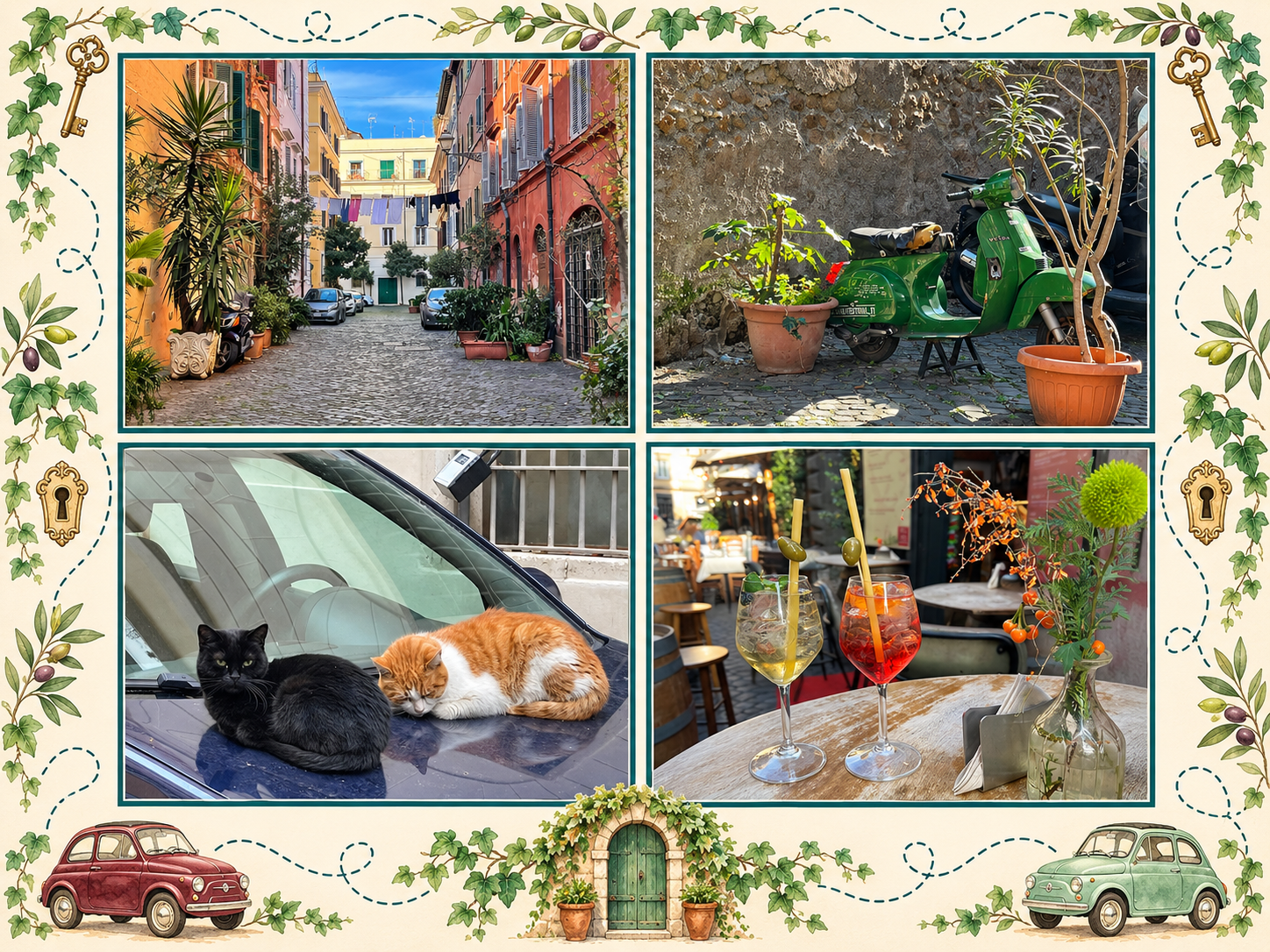
Losing Yourself in Trastevere
If Rome has a heartbeat you can actually hear, it is in Trastevere.
Cross the Tiber on foot, and the city changes its rhythm. The streets narrow into a tangle of cobblestone lanes, ivy tumbles down rust-and-saffron walls, and laundry flutters between windows like little flags. This is a neighborhood made for wandering without a map, and honestly, getting a little lost is the whole point.
Follow your nose. Around one corner, garlic and guanciale sizzle for carbonara. Around the next corner, the sweet perfume of fresh bread drifts from a bakery door; then the smoky warmth of a wood-fired oven; then the sharp, salty bite of pecorino. By the time you reach Piazza di Santa Maria in Trastevere, with its golden mosaics shimmering on the church façade, you will be ready to sit down at the first trattoria with an open table and simply let them feed you.
And then there are the cats. Rome's cats are legendary, and in Trastevere they are practically local celebrities. You will find them stretched across warm doorsteps, perched on scooter seats, or supervising the dinner crowd from a windowsill with complete indifference. They are not strays in the sad sense of the word. The neighborhood looks after them, with little bowls of food tucked beside doorways and kind-hearted gattare, the devoted cat ladies of Rome, making their daily rounds. In fact, Rome's free-roaming cats are considered part of the city's living heritage.
Keep your eyes open, because Trastevere loves to surprise you. A door left ajar reveals a tiny gallery of watercolors. An artisan's workshop spills into the street with hand-bound journals and hammered silver. Once, I followed the sound of laughter into a courtyard and found a pop-up photography exhibition, the artist pouring glasses of wine for anyone who wandered in. You cannot plan moments like that. You can only make room for them.
Coming in Part Two
We have only just scratched the surface. In Part Two, we climb to a hilltop garden that smells of oranges, peek through a tiny hole in a convent wall, and bend down to look through the world's most famous keyhole. We will descend into the catacombs along the ancient Appian Way, walk the once-secret corridor where emperors slipped unseen into the Colosseum, and discover a church that hides an older church and a pagan temple beneath it, with an underground stream still rushing in the dark.
Until then, keep a 50-cent coin in your pocket. You will know exactly what to look for.
By Janet von Rusten
Exquisitely Italy
Ready to experience Italy this way?
Every journey I curate is as personal as the stories I write here. Let's plan yours.