
Hidden Gems
Secret Rome, Part Two: Keyholes, Catacombs and Emperors
The little Fiat is warmed up, and Rome has more secrets to share. Join me for Part Two of Secret Rome, from orange-scented gardens and the city’s most enchanting keyhole to ancient catacombs and hidden Colosseum passages and a sweet Roman treat waiting at the end.
Welcome back. In Part One, we braved the Mouth of Truth, slipped beneath the Trevi Fountain, found Michelangelo hiding in our wallets, and followed our noses through Trastevere's lanes. Now the little Fiat is warmed up, the music is playing, and Rome has a few more secrets she is ready to share.
The Aventine Hill: Oranges, a Hidden Tree and the Famous Keyhole
The Aventine is Rome at its most serene. After the buzz of the centro, the quiet here almost feels like a secret in itself: hushed lanes, high garden walls draped in jasmine, the occasional church bell drifting on the breeze. Within a few minutes’ stroll of one another wait three small wonders.
Il Giardino degli Aranci
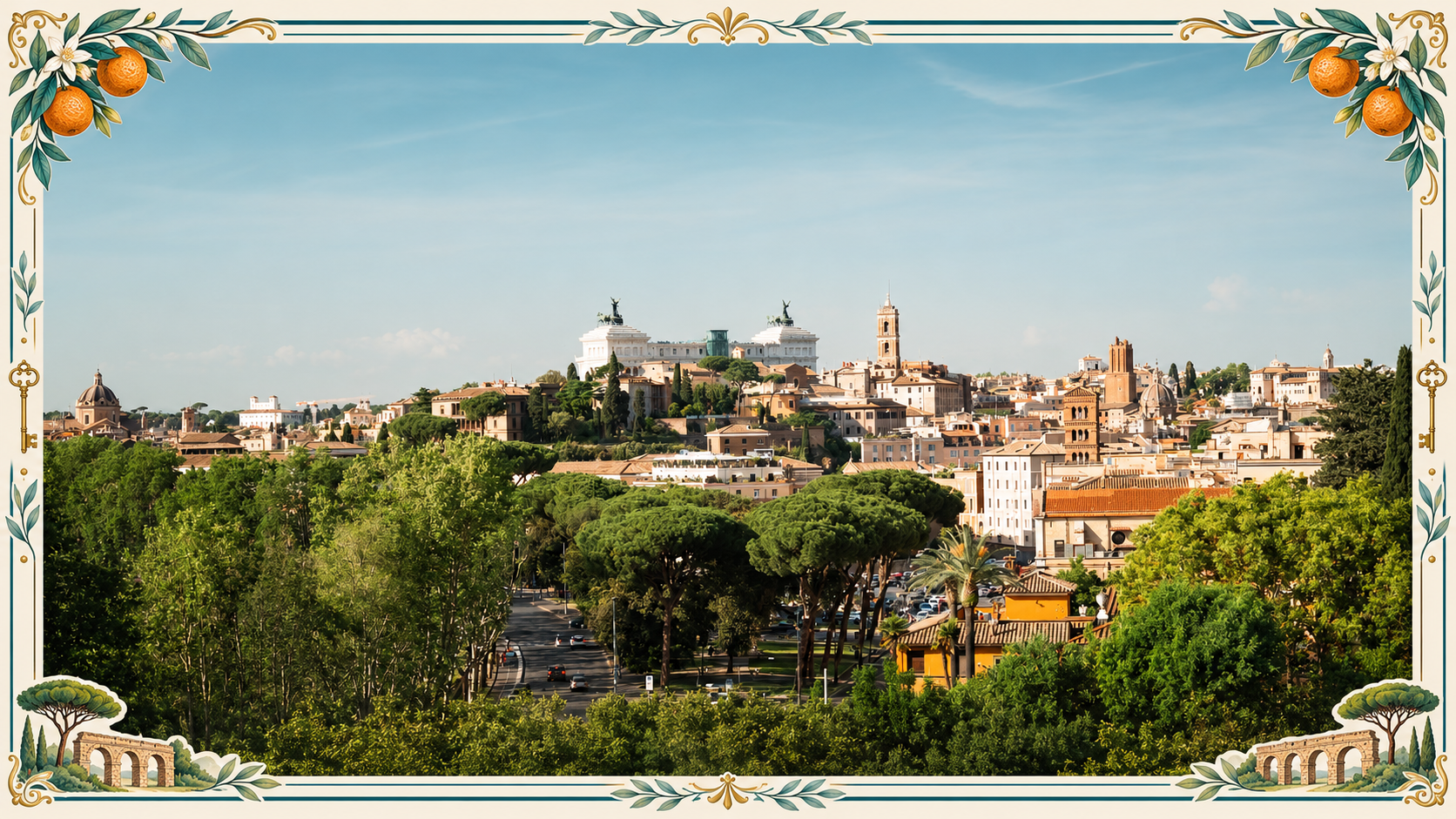
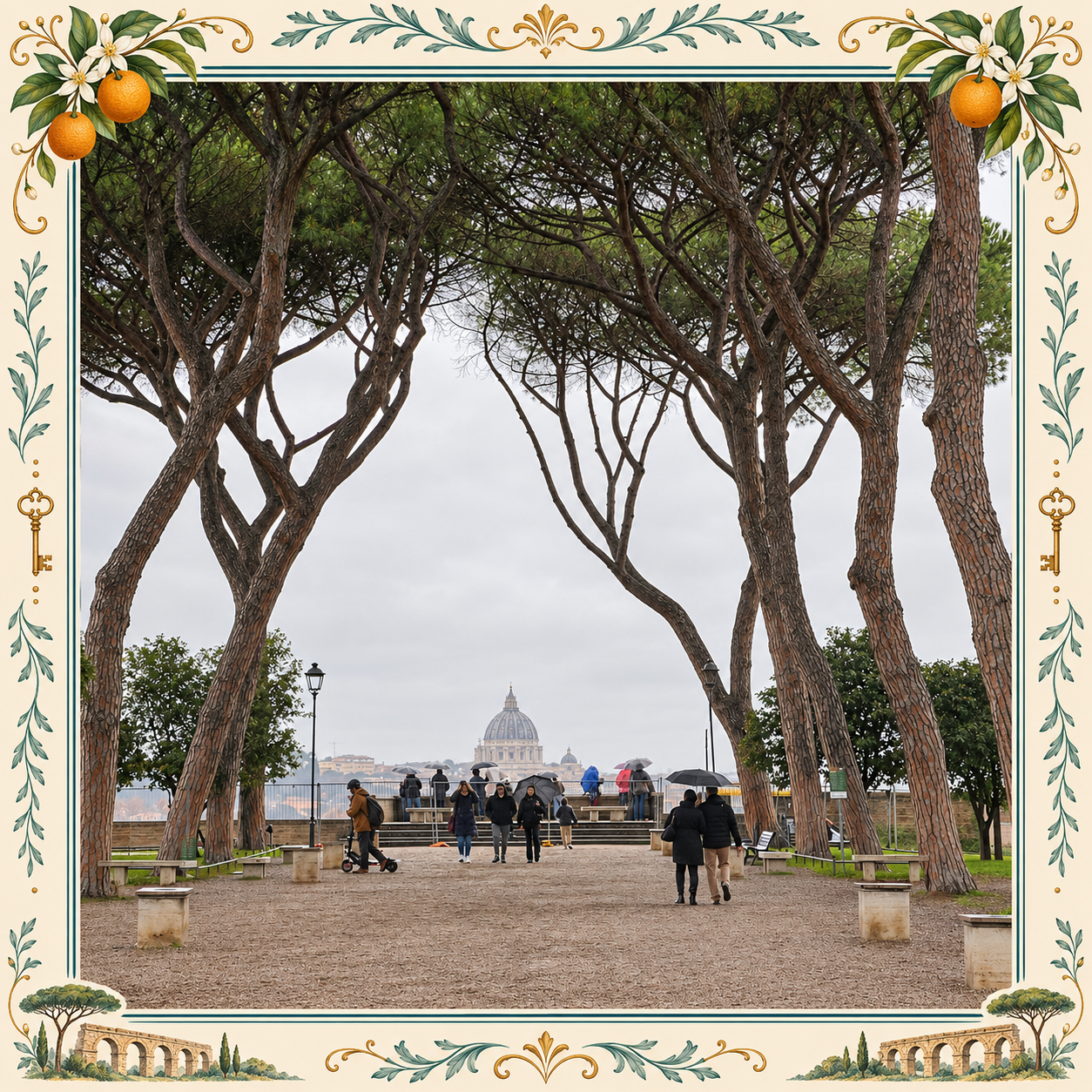
The Orange Garden, officially Parco Savello, is a fragrant grove of bitter orange trees leading to a balustraded terrace. Step up to the edge and the whole city opens beneath you: terracotta rooftops, bell towers, a sea of domes rolling all the way to St. Peter's. Come at golden hour, when the light turns everything the color of apricots and couples linger at the railing long after the sun has slipped away.
Santa Sabina and Saint Dominic's orange tree
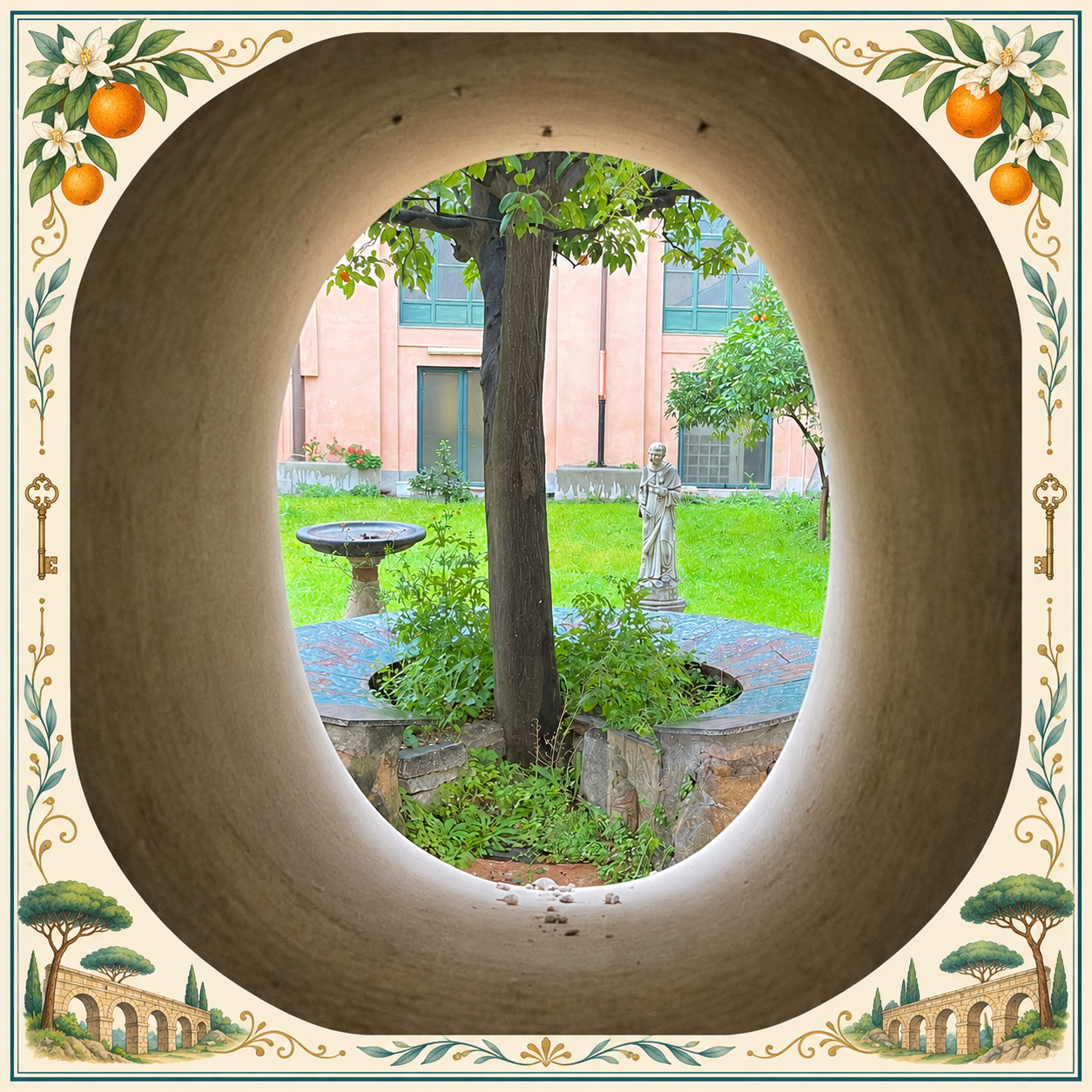
Right next door stands the fifth-century Basilica of Santa Sabina, home to a Dominican convent. Most people walk straight past the clue. In the portico, look for a small opening in the wall. Peek through it and you will see an orange tree growing in the cloister, said to descend from one planted by Saint Dominic himself around 1220. Legend credits it as Italy's very first orange tree. A little window onto eight hundred years, hidden in plain sight.
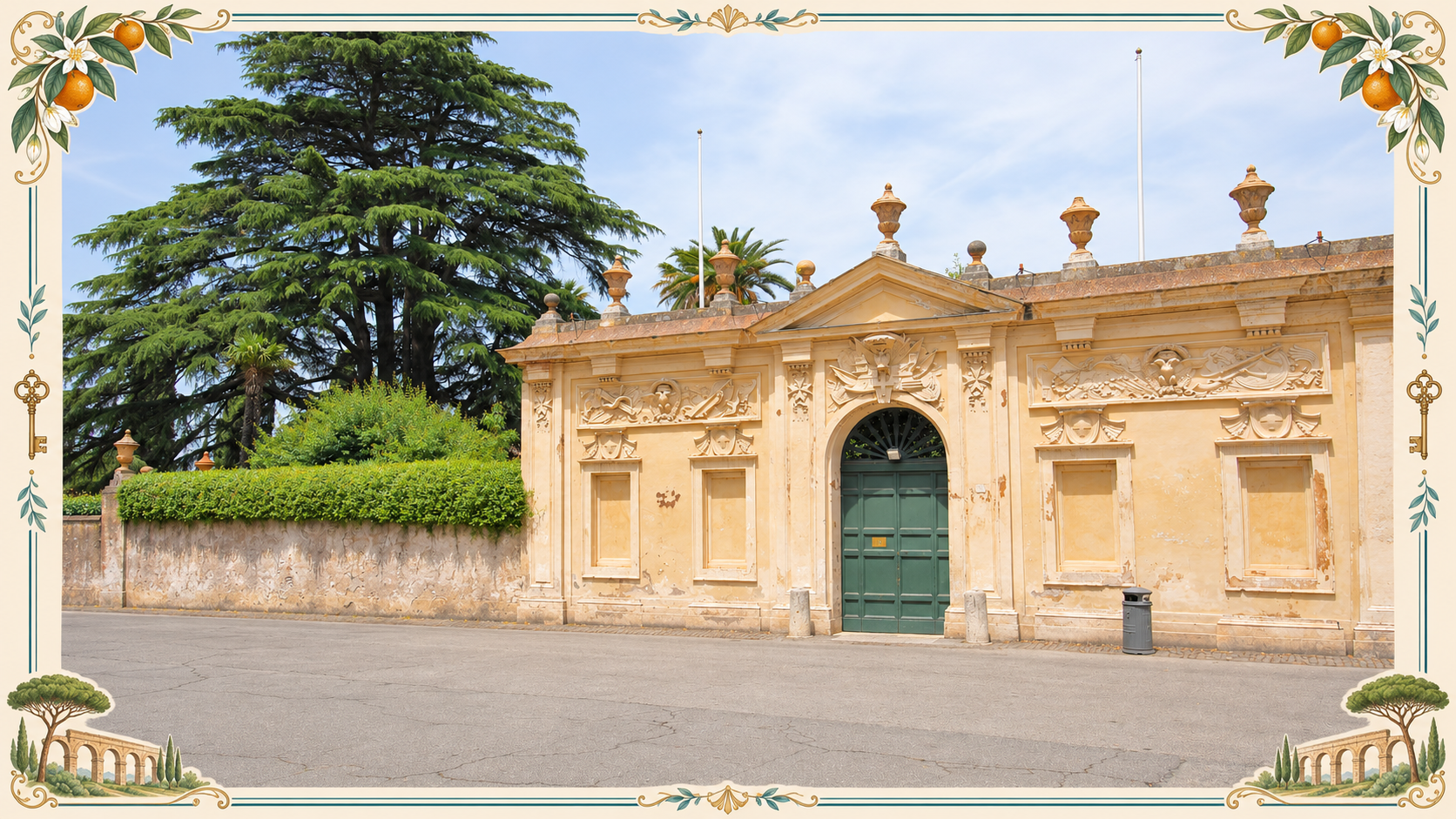
The Knights of Malta keyhole
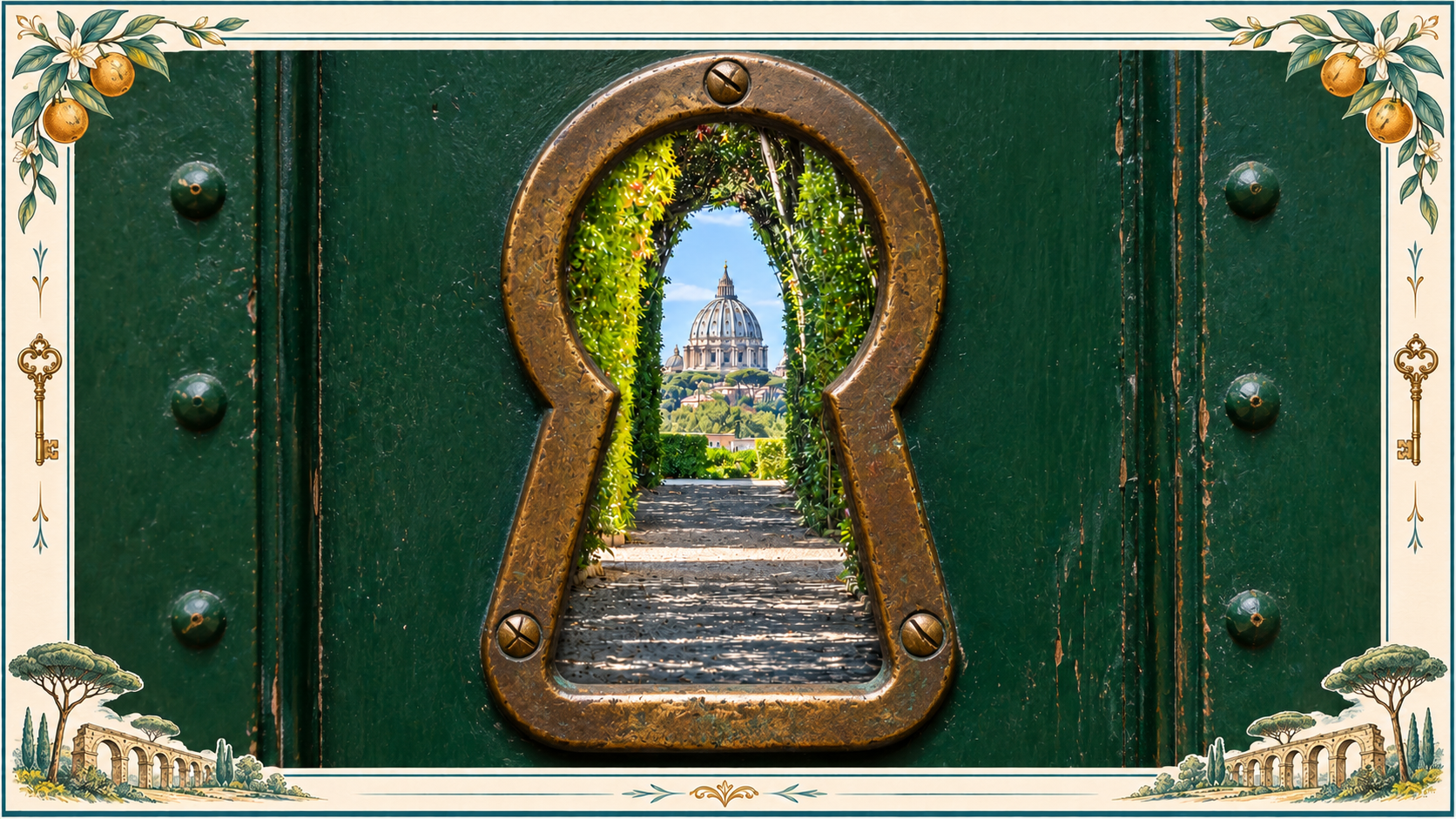
A short walk on, in the Piazza dei Cavalieri di Malta, you will usually find a small, patient line in front of an ordinary green door. It looks like nothing is there at all. Then it is your turn. Bend down, close one eye, and look through the keyhole. Framed perfectly at the end of an avenue of clipped hedges, glowing like a pearl, sits the dome of St. Peter's Basilica. In one tiny glance, you see three sovereign territories at once: the Order of Malta, Italy, and the Vatican. It's spectacular to take in, and a great place to snap a mental photo to remember the beauty of this incredible city.
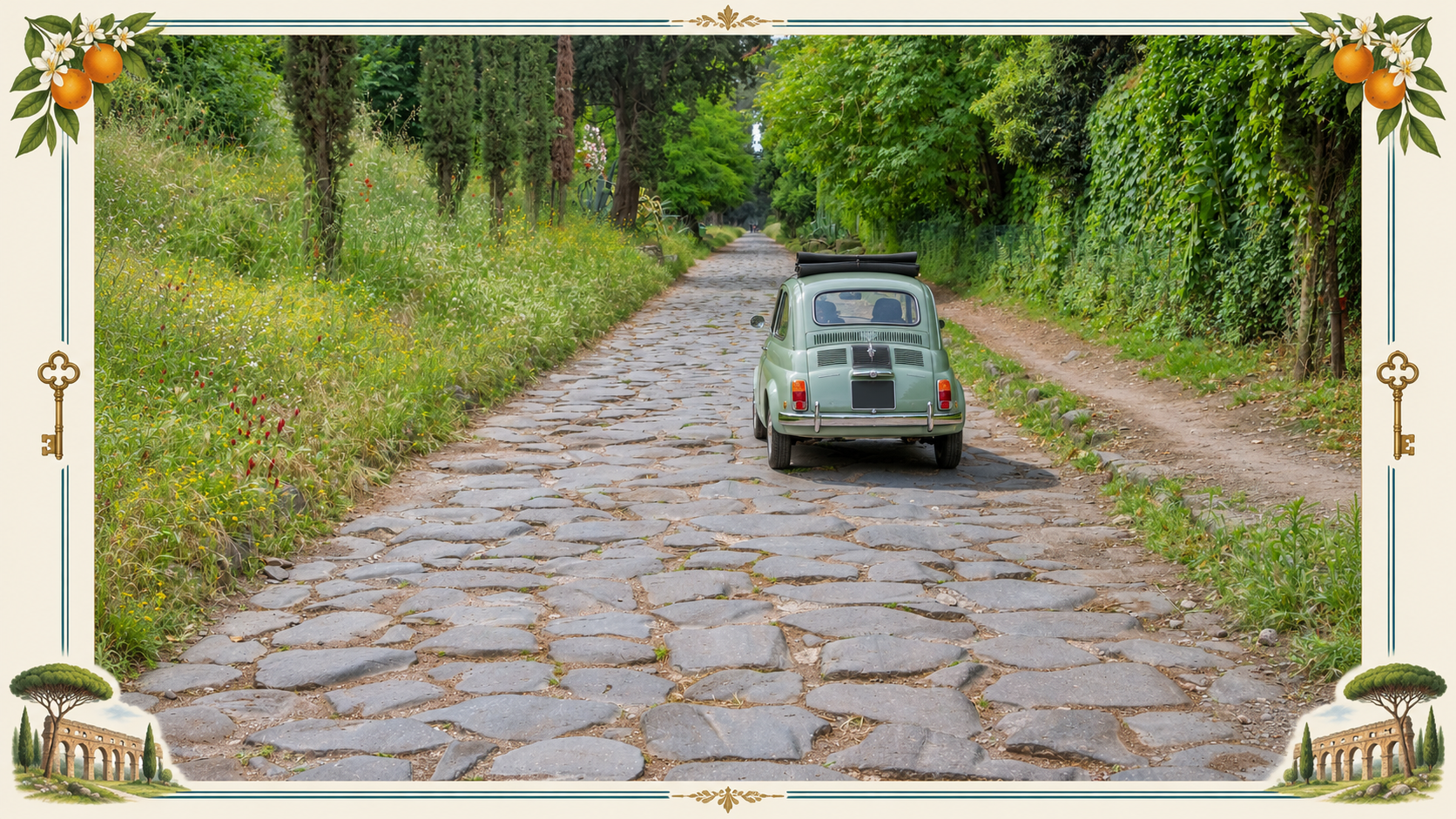
The Catacombs of the Appian Way
Leave the city center behind and follow the Via Appia Antica, the ancient Queen of Roads. This is where the Fiat truly comes into its own. Umbrella pines stand as sentinels along paving stones laid more than two thousand years ago, crumbling tombs peek out from the wildflowers, and cypress trees cast long, cool shadows across the road. It feels less like a drive and more like rolling through a painting.
Beneath these quiet fields lie miles of underground galleries carved into soft volcanic rock, where early Christians were laid to rest. The Catacombs of San Callisto are the most famous, home to the Crypt of the Popes. The Catacombs of San Sebastiano and the vast Catacombs of Domitilla, with their faded frescoes and tiny underground basilica, are every bit as moving.
Walking the cool, narrow passages, you speak in whispers without quite knowing why. Simple symbols scratched into the walls; a dove, a fish, an anchor, were messages of hope left by people who worshipped in secret. You feel the hush of centuries pressing gently around you, and when you finally climb back into the sunlight, Rome looks a little different.
Pair the catacombs with a stop at the Parco degli Acquedotti, where great ancient aqueduct arches stride across the meadows like giants. Bring a picnic. Thank me later.
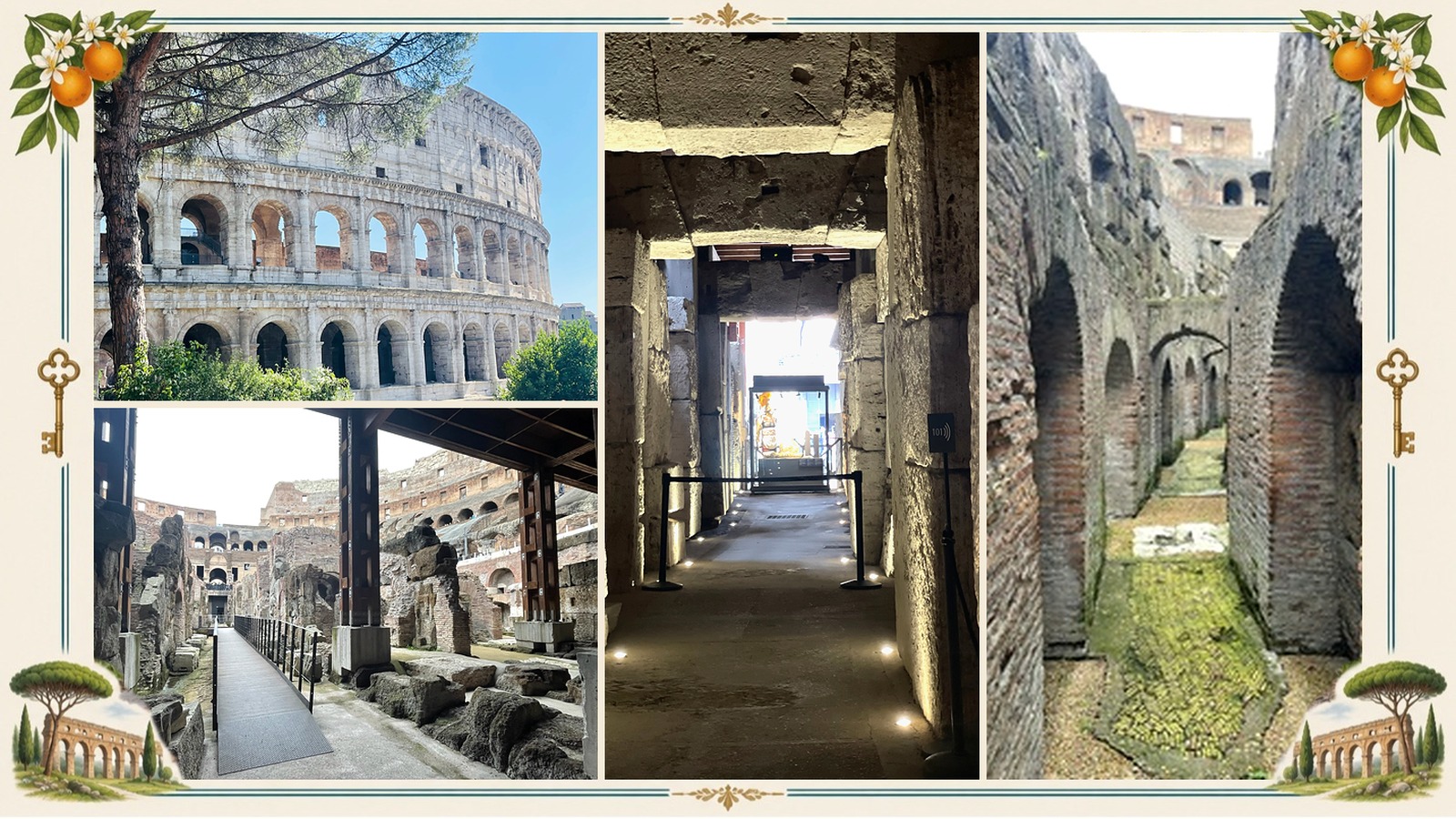
The Colosseum's Newest Secrets
You might think there is nothing left to discover at Rome's most famous monument. You would be wrong. The Colosseum is still revealing hidden corners, and several have recently opened to visitors.
The Passage of Commodus
For the first time in nearly two thousand years, visitors can walk the secret corridor that once let emperors slip into the arena unseen, straight to the imperial box. It is named for Emperor Commodus, the gladiator-obsessed ruler made famous by the film Gladiator, and history says someone once tried to assassinate him right here. The S-shaped passage opened to the public on October 27, 2025, after a year of careful restoration. Look for traces of stucco scenes of boar hunts, bear fights, and acrobats, while soft new lighting recreates the daylight that once filtered through the vault. As you walk through it, you feel the anticipation an emperor must have felt, the roar of fifty thousand spectators growing louder with every step.
The underground and the arena floor
The hypogeum, the labyrinth of tunnels where gladiators and wild animals waited in the dark before the games, now hosts a permanent exhibition on the people behind the spectacles, complete with holographic projections and reconstructions of ancient armor. Standing on the arena floor and looking up at the tiers is something every visitor should experience at least once. You can almost feel the fear and hear the crowds roaring through the arena.
A Night at the Colosseum
On summer evenings, small groups of no more than 25 are guided by moonlight through the emperor's northern entrance, across the arena floor and down into the underground. With the day crowds gone, the stone is still warm, and the silence is extraordinary. In 2026, it ran from mid-July through late August, so mark your calendar for next summer. It is unforgettable.
The restored southern walkways
On the south side of the amphitheater, new travertine from the same Tivoli quarries as the original stone now marks the ancient ground level. Look closely, and you will spot Roman numerals engraved in the paving, the very same system that once guided spectators to their seats.
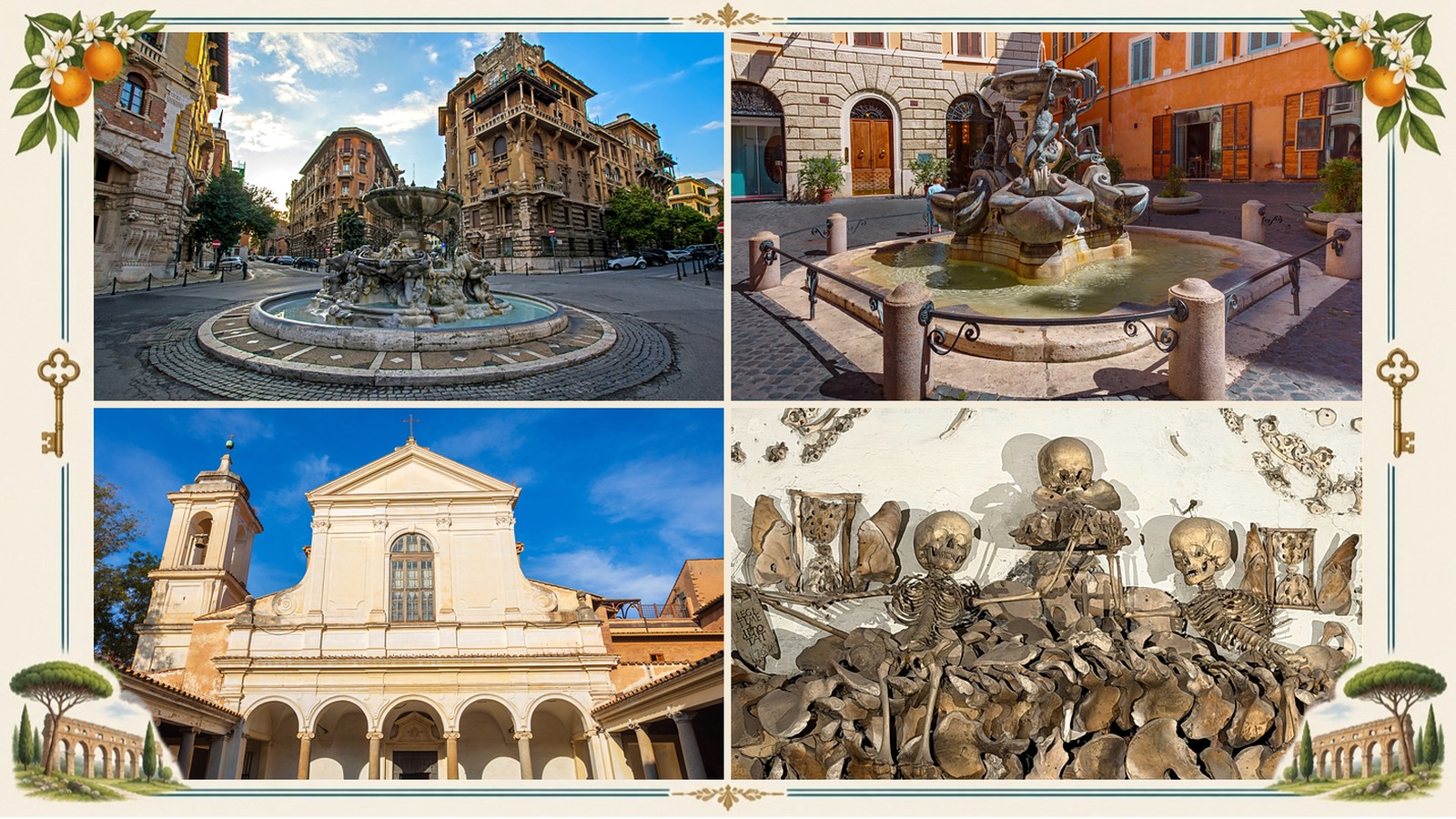
A Few More Whispered Secrets
The Basilica of San Clemente
Just a short walk from the Colosseum, this unassuming church is a staircase through time. The twelfth-century basilica, with its shimmering apse mosaic, sits atop a fourth-century church, and beneath that lies a pagan temple to the god Mithras. Keep descending and listen. On the lowest level, you can hear an ancient underground stream still rushing somewhere in the darkness.
The Turtle Fountain in Piazza Matte
Hidden in the old Jewish Ghetto, this small Renaissance fountain shows four graceful bronze youths lifting delicate turtles toward the basin. It is the kind of place you could easily walk past, and that is exactly its charm. Afterward, wander to a nearby bakery for a slice of ricotta and sour cherry tart, still warm if you time it right.
Quartiere Coppedè
A fairy tale tucked into a quiet residential neighborhood: an extravagant early twentieth-century enclave of Art Nouveau towers, wrought iron, carved spiders, and a whimsical Fountain of the Frogs. It feels like stepping into a storybook, and it is one of my favorite surprise stops in the Fiat.
The Capuchin Crypt
Beneath the church of Santa Maria della Concezione on Via Veneto, the bones of thousands of friars are arranged into intricate chandeliers, rosettes, and archways. Haunting, strangely beautiful, and utterly unforgettable. Not for the faint of heart, but you will be talking about it for weeks.
Let Rome Settle in on You
Rome is not a city you conquer in a weekend. It lets you in slowly, one keyhole, one cistern, and one marble mouth at a time. The magic lives in the moments between the landmarks: the scent of oranges on the Aventine, the cool breath of the catacombs, a cat blinking at you from a Trastevere doorstep, a stranger's smile as your little Fiat rattles past. I fall in love with it more each time I visit.
At Exquisitely Italy, we design for exactly these moments. If you would like to explore Rome's secret side with a private classic Fiat tour and a day shaped entirely around you, we would love to create it.
And before you leave the Eternal City, promise me one thing: eat a maritozzo. As a pastry chef, I can tell you this is Rome's sweetest secret of all. A soft, golden brioche bun, lightly scented with orange and honey, split open and filled with an outrageous cloud of whipped cream, then dusted with powdered sugar. Romans have been enjoying them since ancient times, and tradition says young men once tucked a ring inside to propose to their sweethearts. Order one with a cappuccino at a neighborhood bar in the morning, stand at the counter like a local, and do not even try to eat it gracefully. A little cream on the nose is part of the experience.
Arrivederci, and may your hand always come out of the Mouth of Truth intact.
By Janet von Rusten

Exquisitely Italy
Ready to experience Italy this way?
Every journey I curate is as personal as the stories I write here. Let's plan yours.