Culinary
Tiramisù, a Venetian Wager, and the Ladyfingers That Started It All
There is a particular silence that falls over a table when a good tiramisù arrives. Conversation stops. Spoons hover. Someone always says "oh" under their breath, as though greeting an old friend. I have witnessed that silence in Treviso, in Rome, in tiny Venetian bacari, and in my own kitchen, and I can tell you that I have never once tired of it.
Homemade ladyfingers, a spirited argument in Venice, and a tiramisù challenge I still haven’t settled. Join me for a delicious journey through Italy’s favorite pick-me-up and discover why this pastry chef is finally ready to dust off her apron.
Tiramisù is my favorite dessert. As a pastry chef, I have made it more times than I can count, and I confess, with only the faintest blush, that I am a bit of a snob about it. When I order tiramisù, I do not simply eat it. I dissect it. I study the strata like a geologist. Is the cream airy or heavy? Has the coffee drowned the biscuit or merely kissed it? Is the cocoa bitter enough to wake the palate, or just dusted on for decoration? I am, in short, the dinner companion you either adore or quietly avoid.
Which brings me to Venice, a restaurant kitchen, and a promise I have not yet kept.
A Dessert with Two Birthplaces
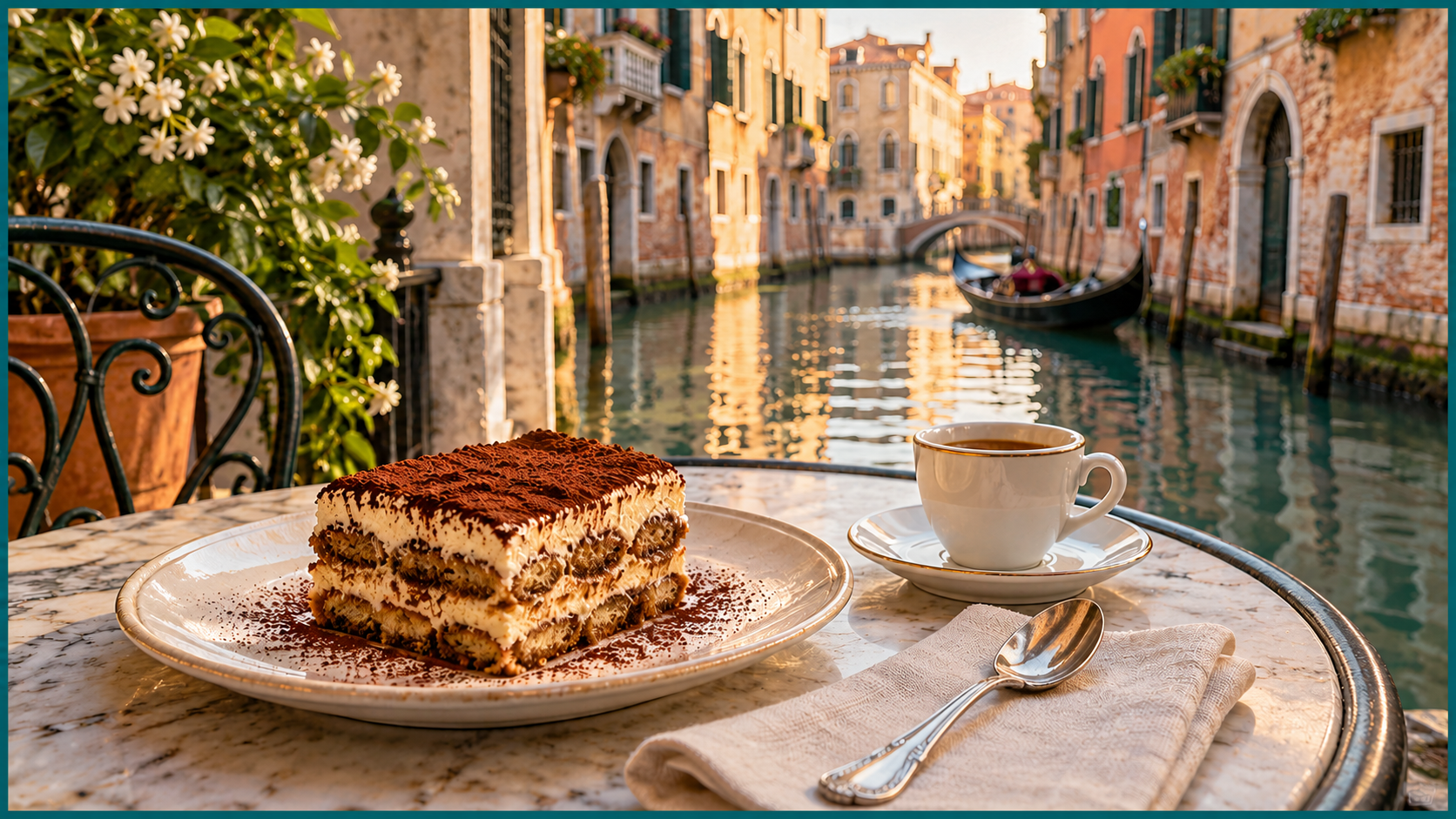
First, a little history, because tiramisù has a story nearly as layered as the dessert itself. The name comes from the Venetian dialect tireme su, meaning "pick me up," a nod to its espresso and the restorative jolt of sugar and eggs. For decades, the accepted story placed its birth in Treviso, the elegant walled city of canals and arcades just north of Venice. There, at the restaurant Le Beccherie, owner Alba Campeol and her pastry chef, Roberto "Lolì" Linguanotto, perfected a dessert of coffee-soaked savoiardi and a cream of egg yolks, sugar, and mascarpone. By 1972 it was on the menu, and within a decade the whole world wanted a spoonful.
Then the plot thickened. Food historians Clara and Gigi Padovani went digging and found evidence pointing northeast, to the Alpine town of Tolmezzo in Friuli Venezia Giulia. There, in the late 1950s, a cook named Norma Pielli was serving hikers at the Hotel Roma a dessert of savoiardi soaked in coffee and layered with mascarpone cream. In 2017, Italy's Ministry of Agriculture listed tiramisù as a traditional food product of Friuli Venezia Giulia, and Treviso, to put it delicately, was not amused.
The Veneto answered in true Italian fashion: with documentation. Le Beccherie's original recipe had already been formally registered with the Accademia Italiana della Cucina in 2010, and in 2024 the Treviso recipe of eggs, sugar, mascarpone, savoiardi, coffee and cocoa earned its own place on the national list of traditional products. Today both regions hold the honor, and neither will ever concede. Add a few colorful legends involving Sienese dukes and a rather notorious Treviso establishment of ill repute, and you have a dessert whose origin story is best enjoyed the way the dessert is: slowly, and with a very good coffee.
The Tiramisù World Cup
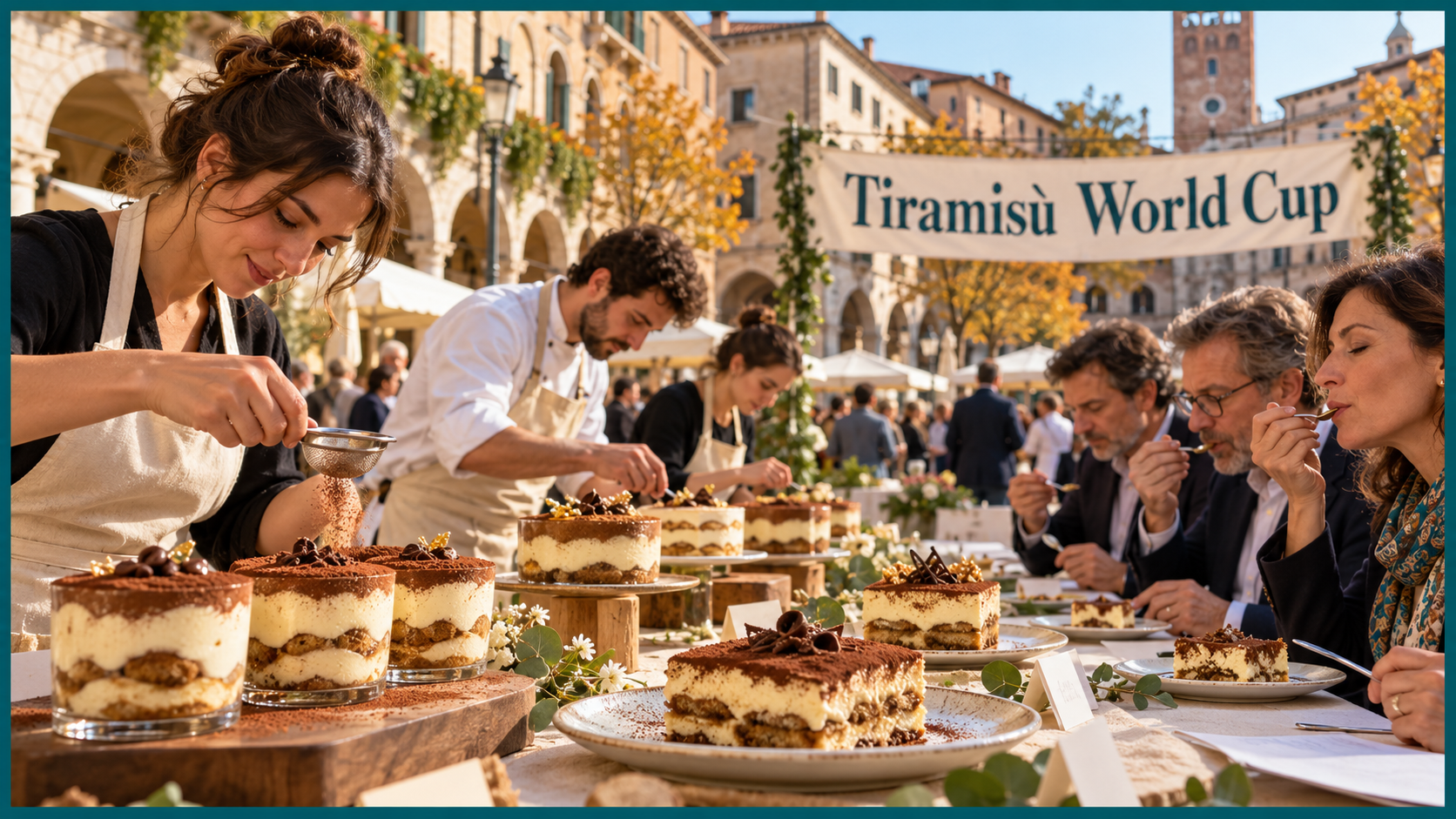
If you need proof of how seriously Italians take this dessert, look no further than Treviso every October, when the city hosts the Tiramisù World Cup.
Founded in 2017 by Francesco Redi, who reasoned that since everyone claims to make the best tiramisù in the world, someone ought to test them, the competition has grown into a full celebration of the spoon dessert. The tenth edition, held just last weekend from October 9 to 11, 2026, gathered 320 competitors from 33 countries in the historic heart of Treviso. Contestants compete in two categories: a classic recipe made strictly with the traditional ingredients, and a creative category where imagination is allowed to run a little wild.
And the tasting? That is the delicious part. Ordinary dessert lovers can apply to sit on the public jury, though first they must pass a fifteen-question quiz on the rules, the history of tiramisù, and Treviso itself. This year there were 130 seats. Visitors who were not judging could still queue at the Loggia dei Cavalieri to taste tiramisù made by past champions, and for the tenth anniversary the organizers even added the very first Tiramisù Run, a 10K through the medieval streets with as much tiramisù as you could manage at the finish line. That is my kind of race.
The 2026 classic title went to Marcos Muzzi, a beekeeper from São Paulo, Brazil, who joins a growing list of champions proving that the perfect tiramisù can be born far from the Veneto.
Please remember that sentence. It will matter in a moment.
(A small confession: the competition is open only to amateurs, so this professional pastry chef will have to settle for cheering from the piazza. Also, the classic category is a strict six-ingredient affair, and the competition even has its own official savoiardo. Which, as you are about to learn, might be a problem for me.)
Why I Make My Own Ladyfingers
Most tiramisù, even very good tiramisù, is built on store-bought savoiardi. There is no shame in that. They are designed to drink up coffee without collapsing, and Italian grandmothers have relied on them for generations.
But I make my own.
Savoiardi carry a little history of their own. Tradition credits their creation to a court pastry chef of the Dukes of Savoy, who is said to have made them in honor of a visit from the French royal family. The same dynasty would later make Turin its capital and, centuries after that, unite Italy under its crown. A biscuit born for royalty deserves to be made by hand at least once in your life.
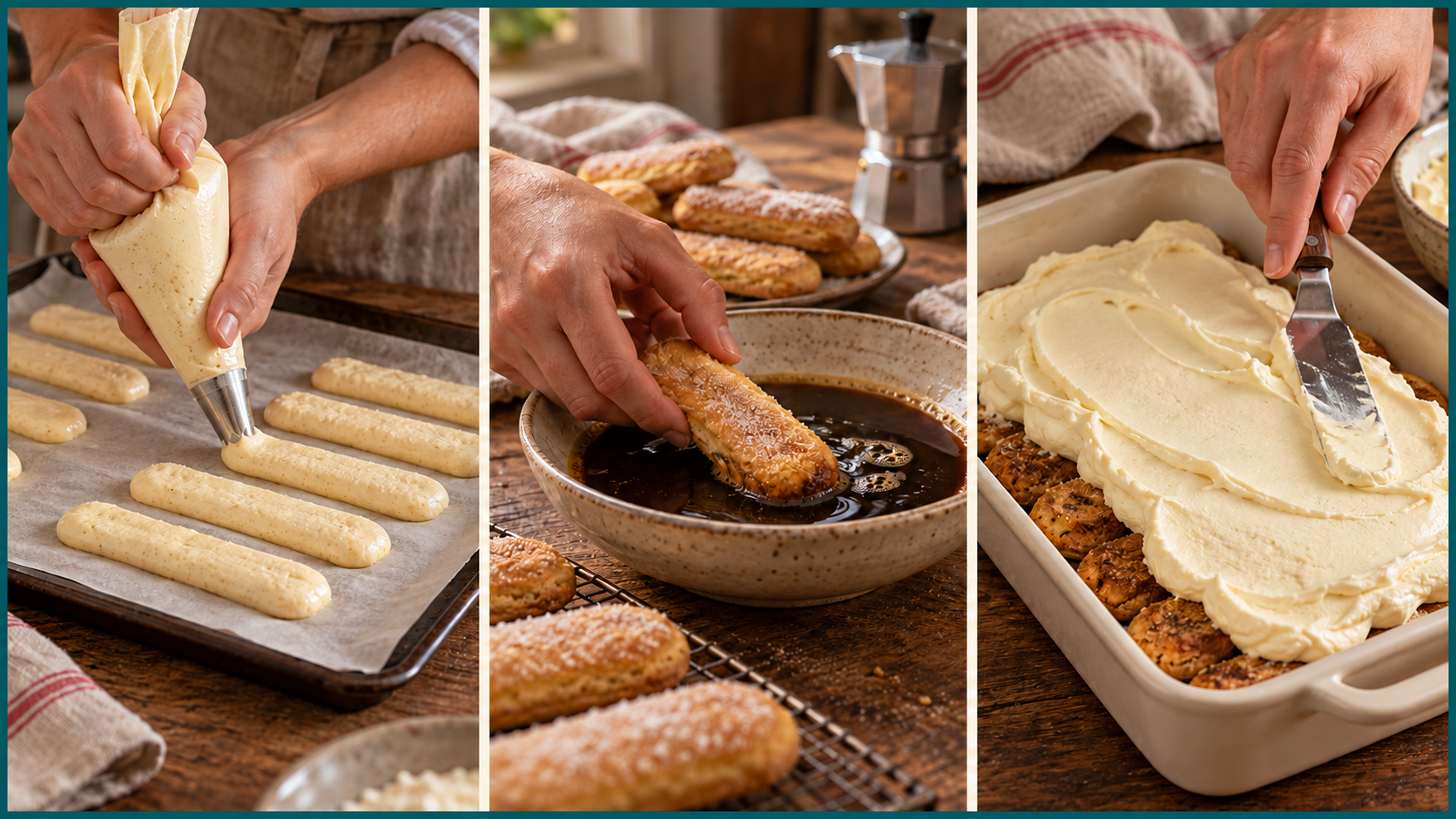
There is something almost meditative about it. Egg whites whipped into glossy peaks, yolks and sugar beaten until they ribbon pale and thick, a gentle fold of flour, so the batter stays as light as breath. I pipe each finger by hand onto parchment, dust them generously with powdered sugar until they wear a faint crackled crust, and slide them into the oven. When they emerge, the kitchen smells of warm vanilla and toasted sugar, and they have that perfect texture: crisp on the outside, tender and sponge-soft within.
That tenderness is everything. A fresh ladyfinger absorbs espresso the way silk absorbs dye: evenly, beautifully, without turning to mush. It gives the finished tiramisù a cloudlike structure that a packaged biscuit simply cannot match. Each bite holds together just long enough before it melts.
My Tiramisù Fortress
Tradition says tiramisù lives in a dish. You layer it, chill it, and cut it into tidy squares; then lift each one out with a spatula and a little prayer that the layers hold. It is humble, generous, and gloriously homey, and I respect it completely.
But somewhere along the way, I went rogue.
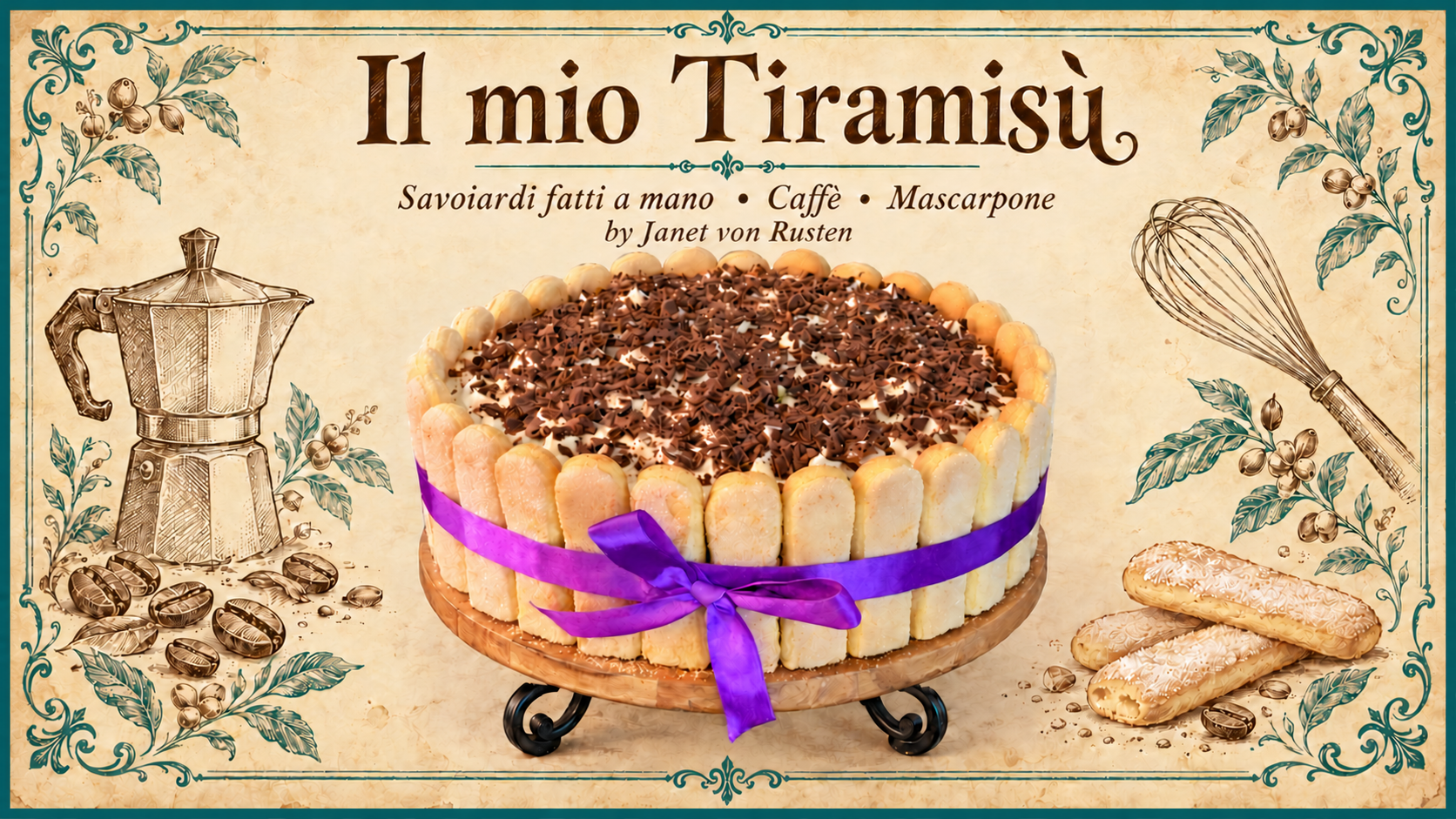
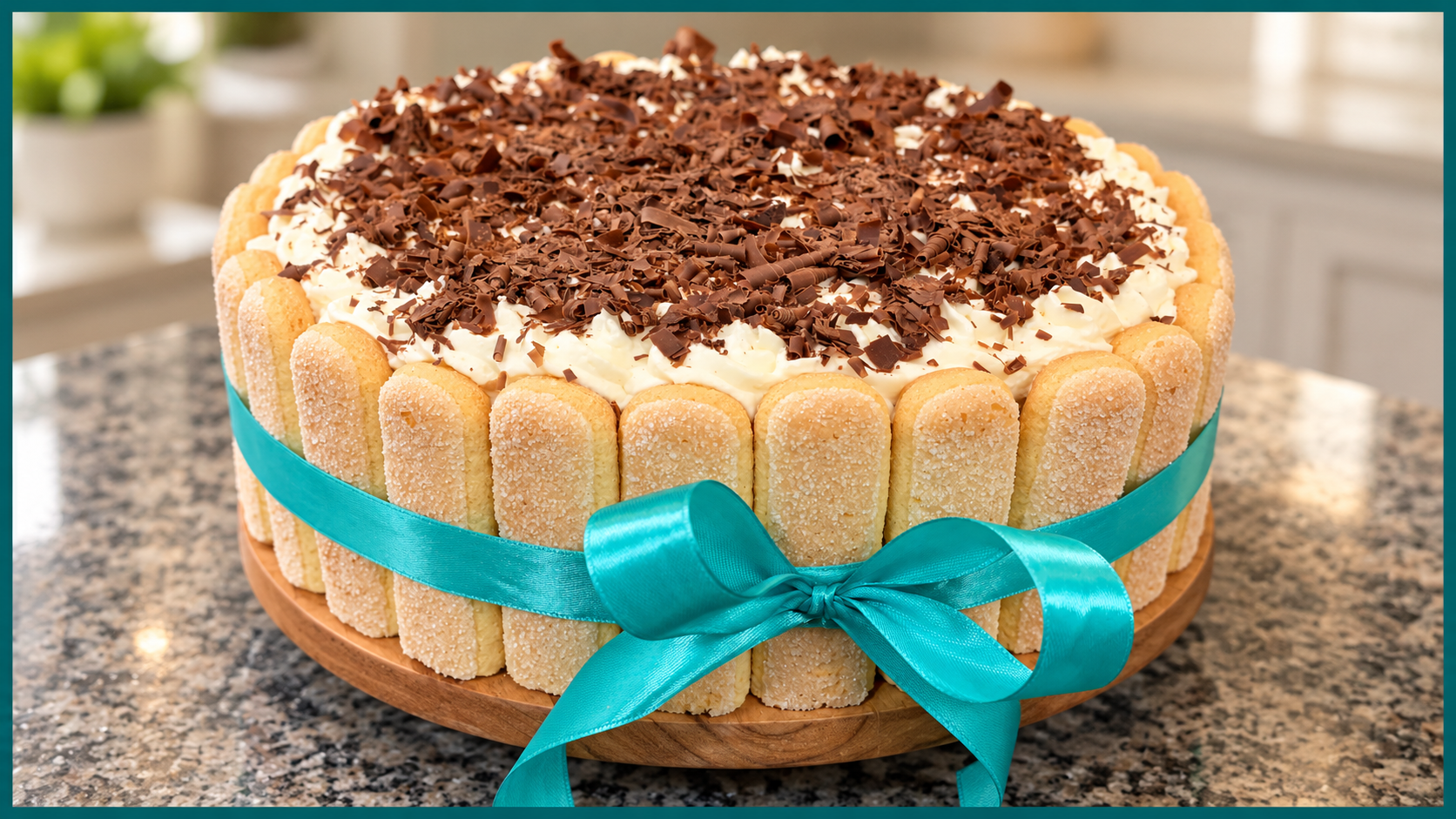
These days, my tiramisù stands tall. I build a wall of my homemade ladyfingers, each one standing upright, shoulder to shoulder like soldiers guarding a treasure, their sugared crusts glinting in the light. Inside, the layers rise: espresso-soaked savoiardi, clouds of mascarpone cream, and more savoiardi, until the whole thing is crowned with piped rosettes of cream and a generous snowfall of dark chocolate curls. A ribbon of satin is tied around the walls with a bow, because a fortress deserves a little ceremony, and then it goes on the cake stand for its grand entrance.
I call it my tiramisù fortress.
Yes, I am fighting tradition. I am fully aware that somewhere in the Veneto, a nonna is clutching her rosary. But when the knife slices through that wall of ladyfingers and the first piece comes away, revealing the layers inside, the table goes quiet exactly as I described at the beginning of this story. The taste is undeniable. And I will confess that none of those silences has done anything to shrink the slight tiramisù ego I may have built over the years.
All of which made me a rather dangerous person to argue with in Venice.
An Argument in Venice
Several years ago, I visited a dear friend who owns a wonderful restaurant in Venice. If you have ever dined in a true Venetian kitchen, you will know the scene: wine glasses catching the lamplight, the soft slap of water against the stones outside, and a table that seems to grow louder and happier as the evening deepens.
Somewhere between the second bottle and dessert, the conversation turned to tiramisù. I mentioned, innocently enough, that it is my favorite dessert to make.
He leaned back, folded his arms, and gave me the look. Every woman who has ever discussed food with an Italian man knows the look.
"You make tiramisù?" he said. "But you are not Italian."
I was not going to let that stand.
What followed was one of the most spirited debates of my life. I defended my tiramisù with a lawyer's passion and a pastry chef's precision. He countered with centuries of Italian heritage, his nonna, and quite possibly the entire Veneto regional government. Then I told him I make my own ladyfingers from scratch.
He stared at me as if I had suggested putting pineapple on a pizza in front of his mother.
"Nobody makes their own savoiardi," he declared. "Why would you do this?"
So, I explained. The texture. The freshness. The way they drink the coffee. The way the cream settles into them rather than sliding off. I watched the battle unfold across his face: every Italian bone in his body resisting, his curiosity as a restaurateur slowly gaining ground.
Finally, with the great reluctance of a man surrendering a family heirloom, he sighed and admitted that fresh ladyfingers... might... possibly... be good.
It was not exactly a white flag. But it was close enough.
By the end of the evening, we had struck a deal, sealed with a handshake and a final glass of wine. I would prove it. I had a standing invitation to return anytime, step into his kitchen, and make my tiramisù, homemade ladyfingers and all.
Time to Dust Off the Apron
That was several years ago. I am a little embarrassed to say I still haven't collected our wager.
Life, as it tends to do, is filled with other things. But the challenge has quietly gnawed at me ever since, like an unfinished recipe lingering in a pastry chef's mind. And when I read that a beekeeper from Brazil had just been crowned the maker of the best classic tiramisù in the world, right there in Treviso, I took it as a sign.
Tiramisù does not belong to a passport. It belongs to whoever treats it with patience, good ingredients, and a little bit of love.
So, I think it is finally time. Time to pack my piping bags, whip my egg whites, and walk into that Venetian kitchen to prove my point. I may even build him a fortress, just to watch his face when he sees it. When I do, you will be the first to hear how it goes, and whether my friend finally admits that an American woman's tiramisù can make an Italian fall silent.
Stay tuned. The apron is coming out of the drawer.
Where to Find Exceptional Tiramisù in Italy
Until then, here are a few places where you can conduct your own delicious research.
Le Beccherie, Treviso, where it all began, or at least where Treviso insists it all began. The restaurant on Piazza Ancilotto has been reborn with a modern, elegant interior and still serves its signature tiramisù. Its hours can be limited, so call ahead before you make the trip. Treviso is an easy half-hour train ride from Venice, making it one of the most delicious day trips in the Veneto.
The Loggia dei Cavalieri, Treviso, October. Time for your visit to the Tiramisù World Cup, and you can taste the creations of past world champions in the heart of the old town. Apply early for the public jury if you want a seat at the judging table.
Tolmezzo, Friuli Venezia Giulia, the dessert's other birthplace, head into the Carnic Alps, where Norma Pielli first served her version to weary hikers. Tasting tiramisù in its Alpine home, with mountain air on your cheeks, is a lovely way to choose your own side in the great debate.
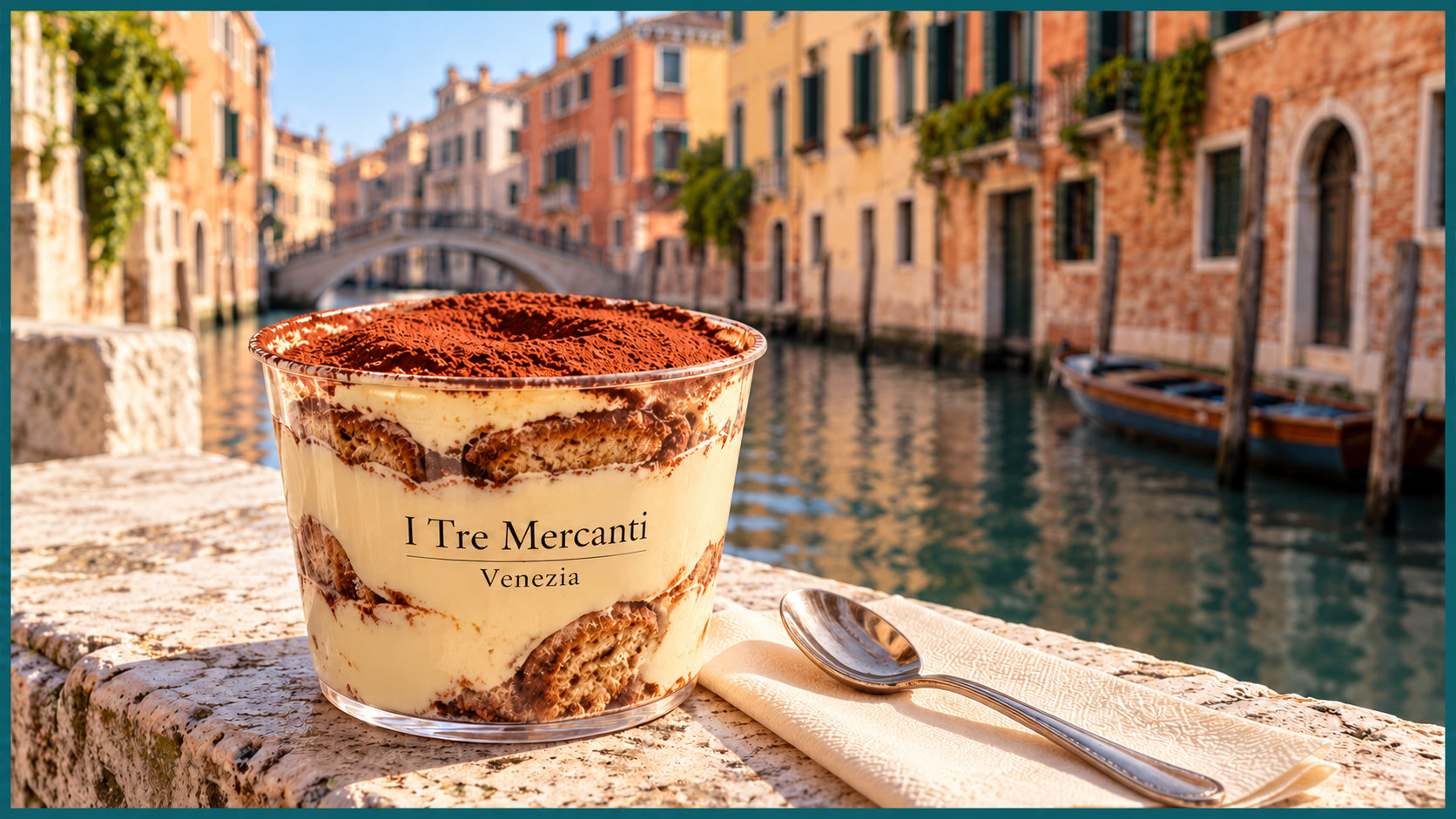
I Tre Mercanti, Venice. Tucked just off the busy lanes near Piazza San Marco, this elegant deli and café prepares fresh tiramisù throughout the day in a remarkable range of flavors, from pistachio to salted caramel. Purists will find a beautiful classic, and the curious will find plenty to explore.
Pompi, Rome. A Roman institution since 1960, Pompi is where locals pick up a tray of tiramisù before dinner at a friend's house. The location near the Spanish Steps sells individual portions in tidy boxes, perfect for eating on the move like gelato.
Gruè, Rome. A refined pasticceria for those who prefer their tiramisù with a little more polish. Their classic version stands out among an already exceptional display.
Wherever you find yourself, order slowly, taste thoughtfully, and do not be afraid to dissect each bite. I certainly will be.
Buon appetito.
By Janet von Rusten
Exquisitely Italy
Ready to experience Italy this way?
Every journey I curate is as personal as the stories I write here. Let's plan yours.